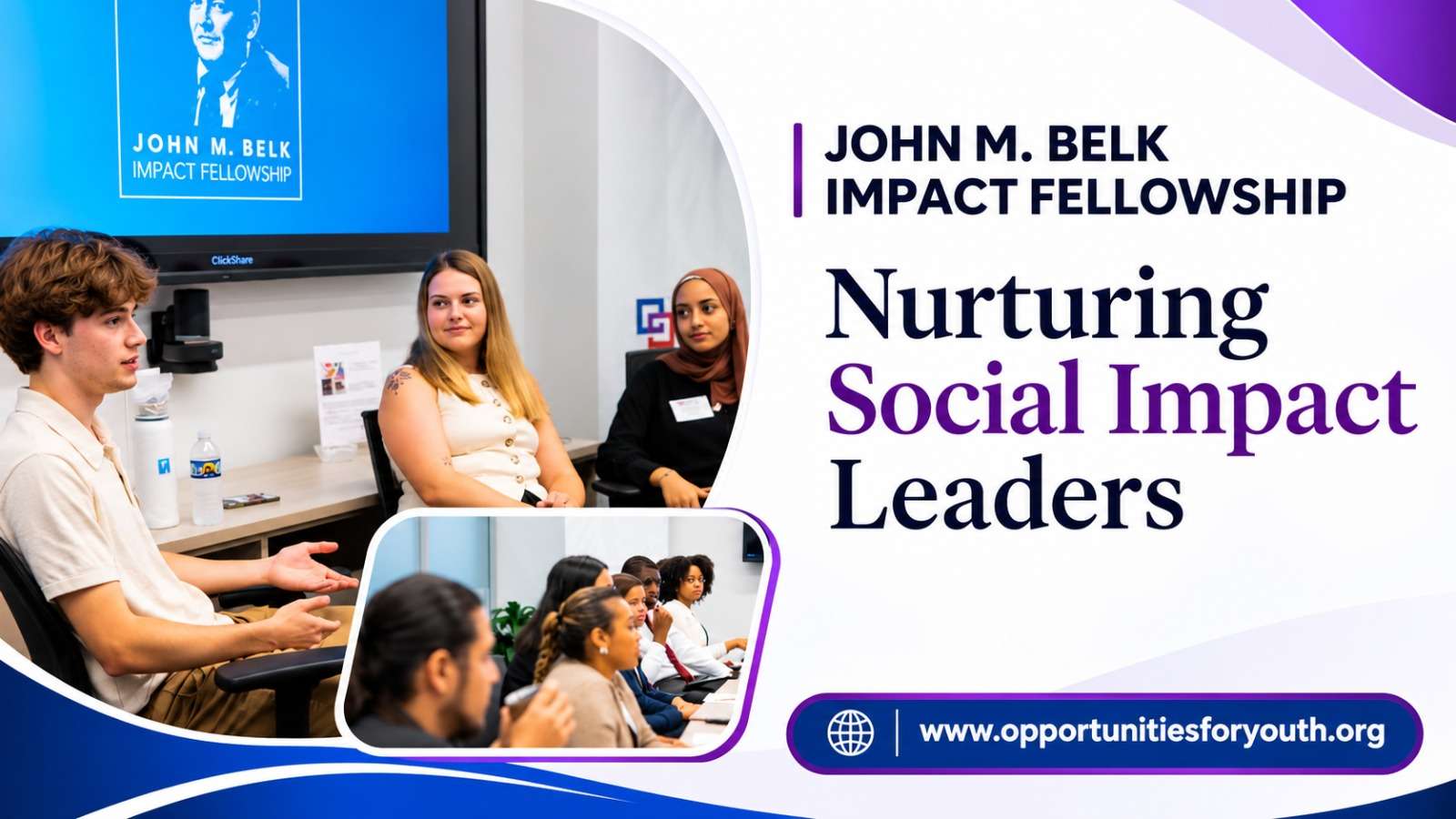
Are you a college or university student in North Carolina interested in education policy, public service, social impact, research, educational equity or community development? Applications are now open for the 2027–2028 John M. Belk Impact Fellowship, a paid 10-month fellowship administered by The Hunt Institute in partnership with the John M. Belk Endowment.
The John M. Belk Impact Fellowship provides an opportunity for eligible students to gain practical experience with organisations working in education, public policy, research, philanthropy and community development. Through placements with nonprofits, educational institutions, philanthropic organisations and other partner organisations, fellows can gain exposure to real-world projects while developing professional skills and building connections with people working in education and public policy.
The programme is designed for students who want to understand how policy decisions, research, partnerships and community initiatives can contribute to improving education and creating positive social impact across North Carolina.
The 2027–2028 cohort will run for 10 months, from August through May. Fellows are expected to work approximately 11–20 hours per week with their host organisations and will receive competitive hourly compensation. The programme also includes professional development, mentorship, networking opportunities and monthly virtual Fireside Chats with education leaders.
Approximately 15–17 fellows are expected to be selected for the cohort.
Eligible applicants must be full-time students enrolled at an accredited college or university in North Carolina. Community college, undergraduate and graduate students may apply, provided they remain enrolled throughout the fellowship.
The application deadline is 5 March 2027 at 11:59 PM. Applications are reviewed on a rolling basis, meaning candidates are encouraged to submit their applications early rather than waiting until the closing date.
The John M. Belk Impact Fellowship is a professional development and experiential learning programme that connects students with organisations working to improve education and generate positive social impact.
Administered by The Hunt Institute in partnership with the John M. Belk Endowment, the fellowship is intended to help students develop practical knowledge of education systems, public policy, research and organisational operations.
Education plays a major role in economic development, workforce preparation, social mobility and community wellbeing. However, improving educational outcomes requires collaboration among educational institutions, government bodies, nonprofit organisations, philanthropic partners, researchers and communities.
Students interested in these areas can benefit from opportunities to understand how organisations identify challenges, develop policy recommendations, conduct research, engage stakeholders and implement programmes.
The John M. Belk Impact Fellowship provides a structured opportunity to gain this exposure while continuing academic studies.
Rather than focusing exclusively on classroom learning, fellows work with host organisations and contribute to activities connected to their areas of placement. These experiences can help participants understand the practical considerations involved in policy development, educational improvement and social impact initiatives.
The programme also recognises the importance of professional relationships and mentorship. Through virtual Fireside Chats, networking opportunities and professional development activities, fellows can engage with education leaders and expand their understanding of the sector.
Overview of the John M. Belk Impact Fellowship 2027–2028
The following is a summary of the fellowship’s main features:
| Fellowship detail | Information |
|---|---|
| Fellowship name | John M. Belk Impact Fellowship |
| Cohort | 2027–2028 |
| Administered by | The Hunt Institute |
| Partner | John M. Belk Endowment |
| Programme duration | 10 months |
| Fellowship period | August to May |
| Compensation | Paid, with competitive hourly compensation |
| Weekly commitment | Approximately 11–20 hours |
| Host organisations | Nonprofits, educational institutions, philanthropic organisations and other partners |
| Expected cohort size | Approximately 15–17 fellows |
| Eligible applicants | Full-time students at accredited North Carolina colleges and universities |
| Eligible academic levels | Community college, undergraduate and graduate |
| Application deadline | 5 March 2027 at 11:59 PM |
| Application review | Rolling basis |
What Does the John M. Belk Impact Fellowship Offer?
The fellowship combines paid work experience, organisational placements, professional development and opportunities to engage with education leaders.
Its programme structure is intended to help students gain practical experience while developing an understanding of the organisations and systems involved in education and social impact.
1. Paid Fellowship With Competitive Hourly Compensation
One of the main features of the John M. Belk Impact Fellowship is that it is a paid programme.
Selected fellows receive competitive hourly compensation for their work with host organisations. This provides an opportunity to gain professional experience while receiving payment for the time dedicated to fellowship responsibilities.
The announcement does not specify the exact hourly rate, payment schedule or total compensation. Interested applicants should consult the official fellowship information or contact The Hunt Institute for clarification.
2. A 10-Month Fellowship Programme
The 2027–2028 cohort will run for approximately 10 months, from August through May.
This extended programme period gives fellows time to become familiar with their host organisations, understand their operations and contribute to relevant projects.
Unlike a very short placement, a 10-month programme can allow participants to experience different stages of organisational work, from understanding a problem and reviewing available information to supporting implementation and preparing reports.
The programme also gives fellows an opportunity to balance practical work experience with their academic development, subject to the fellowship’s requirements.
3. Placement With Partner Organisations
Fellows will be placed with host organisations that may include:
- Nonprofit organisations.
- Educational institutions.
- Philanthropic organisations.
- Other partner organisations.
These placements expose students to different approaches to education, public policy, community engagement and social impact.
For example, a fellow placed with an education-focused nonprofit may support research, communications, community engagement or programme activities. A placement with an educational institution may provide exposure to institutional operations, policy-related projects or data analysis.
The specific responsibilities will depend on the host organisation and the nature of the placement.
4. Professional Development Opportunities
The fellowship includes professional development activities intended to help participants build skills relevant to their academic and career interests.
Professional development can be particularly useful for students preparing to enter careers in education, research, public policy, nonprofit management, government, communications or community development.
Through the programme, fellows can gain experience in areas such as:
- Professional communication.
- Research and analytical work.
- Policy-related assignments.
- Stakeholder engagement.
- Report preparation.
- Organisational operations.
- Teamwork and collaboration.
- Problem-solving and professional decision-making.
The specific training activities and resources available should be confirmed through the official programme information.
5. Mentorship and Guidance
Mentorship is another feature of the John M. Belk Impact Fellowship.
Engaging with experienced professionals can help students understand how education and public policy organisations operate. Mentors can also provide perspectives on professional development, career planning and the skills needed to work in the sector.
For students who are still exploring their career paths, exposure to professionals working in education, research and social impact can help them better understand possible career opportunities.
6. Monthly Virtual Fireside Chats With Education Leaders
The fellowship includes monthly virtual Fireside Chats with education leaders.
These sessions provide fellows with an opportunity to engage with people who have experience in education and related areas.
Discussions with education leaders can help participants understand issues affecting education systems, policy development, institutional leadership and educational improvement.
The sessions may also expose fellows to different professional experiences and perspectives, helping them connect their placement responsibilities with wider discussions about education and social impact.
7. Networking Opportunities
Fellows will have opportunities to build professional connections through their placements, programme activities and engagement with education leaders.
Networking can help students learn about different organisations, career paths and professional experiences within the education and public policy sectors.
Participants may also develop relationships with other fellows who share interests in research, educational equity, community development and public service.
The fellowship does not specify guaranteed employment or permanent placement opportunities after completion. However, the professional relationships developed during the programme may be useful as participants continue their academic and career journeys.
Potential Areas of Experience During the Fellowship
The John M. Belk Impact Fellowship offers exposure to several areas of work connected to education, public policy, research and organisational operations.
The announcement identifies a range of potential responsibilities and learning areas.
1. Education Policy and Research
Education policy and research are among the central areas of experience identified for the fellowship.
Students may gain exposure to how education policies are developed, examined and evaluated. They may also learn how research can be used to understand educational challenges and inform decisions.
Potential activities may include:
- Reviewing education policy issues.
- Supporting research activities.
- Examining information related to educational systems.
- Assisting with research summaries.
- Contributing to discussions about educational equity.
- Supporting the preparation of research-based materials.
This area may be particularly relevant to students interested in education, public policy, political science, sociology, psychology or related academic disciplines.
2. Legislative Analysis and Policy Briefs
The fellowship may also provide experience in legislative analysis and the preparation of policy briefs.
Legislative analysis involves examining laws, proposed legislation and policy decisions to understand their implications.
Policy briefs are documents that present information about a specific policy issue, explain relevant findings and communicate recommendations or considerations to decision-makers.
Potential tasks may include:
- Reviewing legislative documents.
- Researching policy developments.
- Summarising relevant information.
- Identifying key policy issues.
- Preparing briefing materials.
- Supporting the development of policy recommendations.
These experiences can be useful for students interested in government, public administration, political science, legal studies, education policy and advocacy.
3. Qualitative and Quantitative Data Analysis
Data analysis is another potential area of experience.
Qualitative analysis involves examining non-numerical information such as interviews, written responses, observations and stakeholder feedback.
Quantitative analysis involves working with numerical information, including statistics, survey results and other measurable data.
Both approaches can help organisations understand challenges, evaluate programmes and support decision-making.
Fellows may gain exposure to activities such as:
- Organising research information.
- Reviewing datasets.
- Analysing numerical information.
- Examining qualitative responses.
- Identifying patterns and trends.
- Supporting research reports.
- Presenting findings in accessible formats.
Students interested in data analytics, statistics, psychology, economics, sociology, education research or related fields may find this area particularly relevant.
4. Communications and Social Media
The fellowship may also provide opportunities to contribute to communications and social media activities.
Organisations working in education and public policy need to communicate their activities, research, findings and recommendations to different audiences.
Potential responsibilities may include:
- Supporting communication campaigns.
- Preparing written content.
- Assisting with social media activities.
- Helping communicate programme developments.
- Supporting the distribution of research findings.
- Preparing materials for different stakeholders.
This area may be relevant to students interested in communications, journalism, public relations, digital media, marketing and community engagement.
5. Community Engagement and Event Support
Community engagement helps organisations understand the experiences and needs of the people affected by their work.
The fellowship may expose participants to community engagement activities and event support.
Potential responsibilities may include:
- Supporting community engagement initiatives.
- Assisting with event preparation.
- Coordinating event-related activities.
- Supporting communication with participants.
- Helping organise programme activities.
- Assisting with stakeholder engagement.
Students interested in community development, education, social work, public administration and nonprofit management may find these experiences useful.
6. Reports, Recommendations and Briefing Materials
Fellows may also contribute to the preparation of reports, recommendations and briefing materials.
These documents help organisations communicate their findings, explain programme developments and provide information to decision-makers.
Possible activities include:
- Collecting and organising relevant information.
- Preparing written summaries.
- Supporting report development.
- Helping present research findings.
- Drafting briefing materials.
- Assisting with recommendations based on available evidence.
These responsibilities can help students improve their research, writing, analytical and professional communication skills.
Who Should Consider Applying?
The John M. Belk Impact Fellowship is intended for full-time students enrolled at accredited colleges and universities in North Carolina.
The programme is open to students at different academic levels, including community college, undergraduate and graduate students.
Although applicants may come from different academic disciplines, the announcement highlights students with interests in areas such as:
- Education.
- Public policy.
- Political science.
- Data analytics.
- Psychology.
- Related fields.
Students studying other subjects may also wish to review the official eligibility information to determine whether their academic background and interests meet the programme’s requirements.
The fellowship is particularly relevant to students who want to gain practical experience in research, policy development, education systems, communications, data analysis or community engagement.
Eligibility Requirements for the 2027–2028 Fellowship
Applicants must satisfy the programme’s stated student enrolment requirements.
1. Full-Time Student Status
Applicants must be full-time students.
This means the opportunity is intended for individuals who are actively pursuing an academic programme at an eligible institution rather than people who have already completed their studies and are no longer enrolled.
2. Enrolment at an Accredited North Carolina College or University
Applicants must be enrolled at an accredited college or university located in North Carolina, USA.
This is a key eligibility condition. Students attending institutions outside North Carolina should not assume that they qualify simply because they are studying an eligible subject.
The announcement specifically identifies community college, undergraduate and graduate programmes as eligible academic levels.
3. Eligible Academic Levels
Students from the following academic levels may apply:
- Community college students: Individuals enrolled in eligible full-time community college programmes.
- Undergraduate students: Students pursuing bachelor’s-level studies at an accredited North Carolina college or university.
- Graduate students: Students enrolled in eligible graduate programmes.
4. Continued Enrolment Throughout the Fellowship
Applicants must remain enrolled throughout the fellowship.
Since the programme runs from August through May, candidates should consider their academic plans and ensure they can maintain the required enrolment status during the entire programme period.
Students who expect to graduate, withdraw or otherwise change their enrolment status during the fellowship should check with The Hunt Institute before applying.
5. Interest in Relevant Fields
The announcement identifies students with interests in education, public policy, political science, data analytics, psychology and related fields.
Applicants should be able to explain their interest in the fellowship and how the programme connects with their academic background, professional goals or interest in social impact.
The announcement does not specify a minimum grade-point average, a particular degree, a minimum number of previous internships or a required number of years of work experience.
Candidates should consult the official application instructions for any additional selection criteria.
Application Requirements
Applicants are required to prepare and submit several documents and written responses.
The announced application requirements are:
- Resume.
- Unofficial academic transcript.
- Cover letter.
- One letter of recommendation.
- Two short-response questions, with each response limited to 250 words.
Each component provides the selection team with information about the applicant’s academic background, experience, interests and suitability for the fellowship.
1. Resume
Applicants should prepare an updated resume presenting their academic background, relevant experience, skills and activities.
A strong resume should make it easy for the selection team to understand the applicant’s qualifications and interests.
Where relevant, students can include:
- Educational qualifications and current enrolment.
- Research or academic projects.
- Internships and work experience.
- Volunteer activities.
- Leadership responsibilities.
- Community engagement.
- Data analysis and research skills.
- Communications and writing experience.
- Relevant technical and professional skills.
Applicants should ensure that the information in their resumes is accurate and clearly presented.
2. Unofficial Academic Transcript
The application requires an unofficial transcript.
An academic transcript provides information about a student’s academic record and progress.
Applicants should obtain the appropriate document from their college or university and ensure that it is readable before uploading it.
Since the requirement specifies an unofficial transcript, candidates should follow the application instructions rather than assuming that they must pay for an official transcript.
3. Cover Letter
The cover letter should explain why the applicant is interested in the John M. Belk Impact Fellowship and how their background connects with the programme.
A useful cover letter can address:
- The applicant’s current academic programme.
- Their interest in education, policy or social impact.
- Relevant academic, professional or volunteer experiences.
- Skills they would bring to a host organisation.
- What they hope to learn from the fellowship.
- How the opportunity relates to their future career goals.
Applicants should avoid simply repeating the information already included in their resumes. The cover letter should provide a clear explanation of their motivation and suitability.
4. One Letter of Recommendation
Applicants must submit one letter of recommendation.
A recommendation letter can provide an independent perspective on the applicant’s academic performance, skills, character, work ethic or potential.
Students may wish to approach an academic adviser, lecturer, supervisor, employer or another person who knows their work and can provide a meaningful assessment.
Applicants should give their recommenders enough time to prepare the letter before the application deadline.
The official application instructions should be consulted for any specific requirements relating to the recommender or submission process.
5. Two Short-Response Questions
Applicants must also answer two short-response questions.
Each response should be 250 words.
Because the responses are short, candidates should focus on answering the questions directly and providing specific examples where appropriate.
Before submitting, applicants should check that:
- Each response addresses the question asked.
- The answers are within the stated word limit.
- The writing is clear and organised.
- Examples are relevant to the fellowship.
- All information is accurate and consistent with the resume and cover letter.
The exact wording of the two questions should be obtained from the official application platform.
How to Prepare a Competitive Application
Since applications are reviewed on a rolling basis, early preparation is recommended.
Candidates can improve their readiness by taking the following steps:
Step 1: Confirm Your Eligibility
Before preparing the application, confirm that you:
- Are a full-time student.
- Are enrolled at an accredited college or university in North Carolina.
- Are studying at community college, undergraduate or graduate level.
- Can remain enrolled throughout the fellowship.
- Have interests relevant to education, public policy, research, data analytics, psychology or related fields.
Step 2: Update Your Resume
Review your resume and make sure it reflects your current academic and professional background.
Highlight experiences that demonstrate research ability, communication, leadership, teamwork, data analysis, problem-solving or community involvement.
Step 3: Request Your Transcript
Contact your institution or access its student portal to obtain your unofficial transcript.
Check that the document contains the necessary academic information and is ready for submission.
Step 4: Identify a Suitable Recommender
Choose someone who can provide a meaningful recommendation based on your academic or professional performance.
Approach the person early and share information about the fellowship so they understand the opportunity and the qualities that may be relevant.
Step 5: Prepare Your Cover Letter
Explain your interest in education, public policy and social impact. Connect your academic background and experiences to the fellowship’s potential areas of work.
Step 6: Draft the Short-Response Answers
Read the two application questions carefully and prepare focused responses of no more than 250 words each.
Use clear examples to explain your interests, experience and goals.
Step 7: Submit Early
The Hunt Institute reviews applications on a rolling basis. Early submission is therefore encouraged.
Do not wait until the final day to upload documents or complete the application.
Fellowship Duration, Working Hours and Programme Structure
The 2027–2028 John M. Belk Impact Fellowship will last 10 months, running from August through May.
Fellows are expected to work approximately 11–20 hours each week with their host organisations.
This part-time commitment is intended to provide students with practical experience while allowing them to continue their academic programmes.
The exact work schedule and responsibilities may vary depending on the host organisation and placement.
Applicants should consider the following before applying:
- Whether their academic timetable can accommodate the weekly commitment.
- Whether they can remain enrolled throughout the fellowship.
- Whether they can meet the expectations of their host organisation.
- Whether they can participate in programme activities, including monthly virtual Fireside Chats.
- Whether they can commit to the full fellowship period.
Candidates should confirm the specific placement arrangements and any additional participation requirements with the programme administrators.
Why the John M. Belk Impact Fellowship Matters for Students Interested in Education and Public Policy
Students interested in education and public policy often need opportunities to understand how academic knowledge connects with real-world challenges.
The John M. Belk Impact Fellowship offers exposure to organisations working on these issues, allowing participants to gain experience beyond their regular academic programmes.
For example, a student interested in public policy may gain exposure to legislative analysis and policy briefs. A student interested in data analytics may work with qualitative or quantitative information. Someone interested in communications may support social media and organisational communication activities.
Similarly, students interested in community development may gain experience supporting engagement activities and events.
This range of possible experiences makes the programme relevant to students considering careers in:
- Education policy and administration.
- Public policy and government.
- Research and data analysis.
- Nonprofit and philanthropic organisations.
- Community development.
- Social impact programmes.
- Communications and public engagement.
- Education advocacy.
- Programme management.
- Public service.
The fellowship does not guarantee employment in these fields. However, the practical experience and professional development activities may help participants better understand the work involved and prepare for future opportunities.
Application Deadline for the John M. Belk Impact Fellowship 2027–2028
The application deadline is 5 March 2027 at 11:59 PM.
Applications are reviewed on a rolling basis, so candidates are encouraged to apply as early as possible.
Submitting early gives applicants more time to address any issues with their documents or application submission. It also avoids the risk of missing the deadline because of technical problems or incomplete requirements.
Candidates should confirm the applicable time zone and final submission instructions on the official application platform.
How to Apply for the John M. Belk Impact Fellowship
Interested and eligible students can access the official fellowship information and application through the links below.
Learn more about the fellowship:
https://lnkd.in/gRbS2gzE
Apply for the 2027–2028 cohort:
https://lnkd.in/gRMCBSjk
Applicants should review the programme details and eligibility requirements before submitting their applications.
For questions about the fellowship, eligibility or application process, contact The Hunt Institute at:
Email: belkimpactfellows@hunt-institute.org
Conclusion
The John M. Belk Impact Fellowship 2027–2028 offers full-time students enrolled at accredited colleges and universities in North Carolina an opportunity to gain paid professional experience in education, public policy, research and social impact.
Through a 10-month placement programme, fellows can work with nonprofits, educational institutions, philanthropic organisations and other partners while developing practical skills in areas such as policy analysis, research, data analysis, communications, community engagement and report preparation.
The programme also includes competitive hourly compensation, professional development, mentorship, networking opportunities and monthly virtual Fireside Chats with education leaders. With approximately 15–17 fellows expected to be selected, the fellowship provides a structured opportunity for students to connect their academic interests with practical work in organisations contributing to education and community impact.
Students at community college, undergraduate and graduate levels who meet the North Carolina enrolment requirements are encouraged to review the application details and prepare the required documents.
Applications are due by 5 March 2027 at 11:59 PM, and candidates are encouraged to submit early because applications are reviewed on a rolling basis.
If you are a full-time student in North Carolina interested in education, public policy, research or social impact, consider applying for the John M. Belk Impact Fellowship 2027–2028.