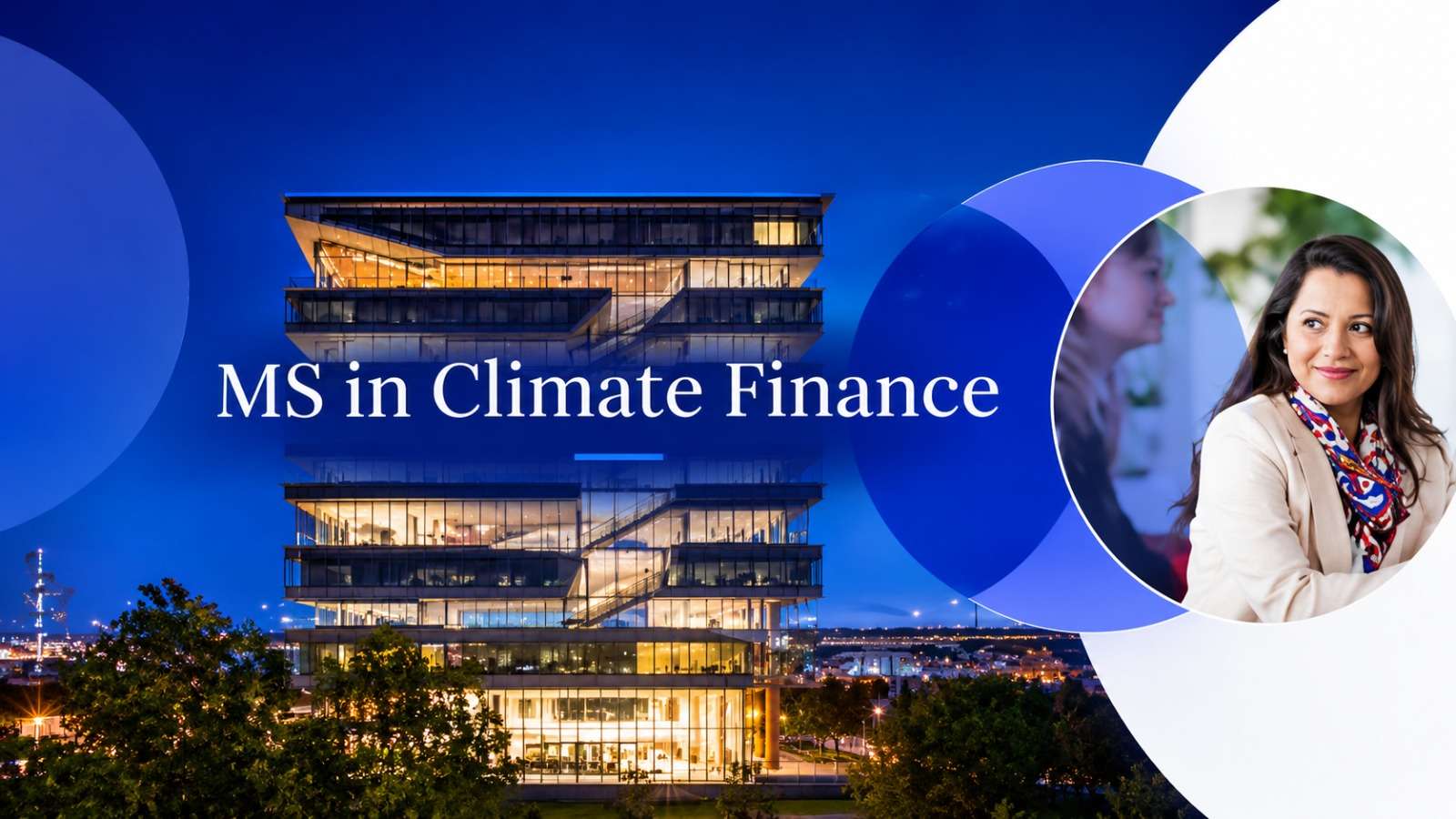
Applications are open for the Stanley Park Climate Finance Scholarships at Columbia University for the Fall 2027 intake. Offered through the Columbia Climate School, these competitive scholarships will provide full tuition coverage for three students enrolling in the inaugural cohort of the Master of Science (MS) in Climate Finance programme.
The scholarship is designed to support talented students with demonstrated financial need who are committed to addressing the financial challenges associated with the global climate crisis. It particularly seeks to expand access for individuals from emerging and developing economies who intend to contribute to the public and non-profit sectors and help increase climate investment in regions and technologies where financing remains insufficient.
The initiative responds to the growing need for professionals who understand both climate issues and financial systems. As countries work towards the goals of the Paris Agreement, governments, financial institutions, international organisations and development partners increasingly need specialists capable of designing and implementing innovative approaches to climate finance.
Through the Stanley Park Climate Finance Scholarships, Columbia Climate School aims to cultivate a new generation of professionals equipped to combine expertise in climate and finance, address structural barriers to climate investment and develop solutions that can help mobilise the resources required to respond to climate change.
The scholarship will cover the full tuition costs of three selected students in the inaugural MS in Climate Finance cohort. Interested candidates must first apply for admission to Columbia Climate School and meet the relevant priority application deadline to gain access to the separate scholarship application.
The priority application deadline is January 15, 2027, while the final application deadline for the Fall 2027 graduate intake is March 1, 2027. However, candidates seeking consideration for the Stanley Park Climate Finance Scholarships must pay particular attention to the January 15 priority deadline.
The Stanley Park Climate Finance Scholarships are offered by Columbia Climate School at Columbia University in New York, United States.
The scholarships are intended to support three incoming full-time students enrolling in the inaugural cohort of the Master of Science in Climate Finance programme.
The initiative is based on the recognition that addressing climate change requires substantial increases in public and private investment. Although climate finance has grown over the years, the scale of investment required to meet international climate objectives remains considerably larger.
The scholarship therefore seeks to develop professionals who can contribute to the design, development and implementation of innovative climate finance solutions.
It is particularly interested in students who understand that climate finance challenges are not simply about the availability of money. They also involve structural barriers, financial market distortions, geographical inequalities and difficulties directing investments towards the technologies and communities that need them most.
By supporting students with financial need and a commitment to public-interest work, the programme aims to strengthen the capacity of future professionals to address these challenges.
Why Climate Finance Matters in Addressing the Global Climate Crisis
Climate change is one of the most significant challenges facing countries, communities, economies and institutions around the world. Responding effectively requires more than environmental policies and technological innovation. It also requires financial resources on a scale capable of supporting the transition towards sustainable and climate-resilient development.
Climate finance refers broadly to the financial resources used to support activities that address climate change. These include investments in reducing greenhouse gas emissions, adapting to climate impacts, strengthening resilience and developing sustainable technologies and infrastructure.
Financial markets are particularly important because they can influence how public and private resources are allocated. Banks, investors, governments, development institutions and other financial actors can help direct capital towards projects and technologies that contribute to climate objectives.
However, the current scale of climate investment is not sufficient to meet the level of ambition required by the Paris Agreement.
The Columbia Climate School scholarship description highlights that public and private climate finance almost doubled between 2011 and 2020. Despite this progress, significantly larger investments are still needed.
This creates an urgent demand for professionals who can understand both the financial and climate dimensions of the challenge.
1. Increasing Climate Investment
Meeting international climate targets requires substantial investment in areas such as clean energy, sustainable infrastructure, climate adaptation and other climate-related technologies.
Governments and private institutions need professionals who can identify financing opportunities, develop suitable financial approaches and help mobilise investment at scale.
2. Addressing Financial Barriers in Developing Economies
Emerging and developing economies often face particular challenges in attracting and accessing climate finance.
These challenges may involve the structure of financial markets, investment risks, limited access to capital and difficulties directing financing towards critical sectors and technologies.
The Stanley Park Climate Finance Scholarships specifically seek candidates interested in addressing the barriers that prevent climate finance from reaching critical geographies.
3. Strengthening Public and Private Sector Collaboration
Climate investment requires contributions from different actors, including governments, financial institutions, investors, international organisations and development agencies.
Professionals with knowledge of both climate policy and financial systems can help develop approaches that encourage collaboration between these actors.
4. Supporting Critical Climate Technologies
Increasing climate investment also requires identifying and addressing the financial challenges associated with important climate technologies.
The scholarship seeks candidates who are interested in promoting solutions that can substantially increase financing for critical technologies and geographical areas.
5. Addressing Structural Problems in Climate Finance
The scholarship places particular emphasis on the structural aspects of global climate finance.
This means that applicants should be interested in understanding why financing may not reach certain regions, sectors or technologies, what barriers influence investment decisions and how existing financial arrangements can be improved.
The objective is to develop professionals who can contribute to solutions that address the underlying problems affecting climate investment rather than focusing exclusively on individual projects.
About Columbia Climate School
The Columbia Climate School is part of Columbia University, an internationally recognised institution based in New York City, United States.
The Climate School focuses on education, research and impact relating to climate change and its wider implications for society.
Its academic programmes bring together different areas of knowledge to address climate-related challenges. These include environmental and natural sciences, social sciences, policy, finance and other disciplines relevant to understanding and responding to climate change.
The school’s graduate programmes are designed for students who want to develop the knowledge and professional capabilities needed to contribute to climate-related work.
The Stanley Park Climate Finance Scholarships are connected specifically to the school’s Master of Science in Climate Finance programme.
What Is the MS in Climate Finance Programme?
The Master of Science in Climate Finance is a graduate programme at Columbia Climate School designed to connect climate expertise with financial knowledge.
The programme is relevant to the growing demand for professionals who can understand the financial systems, investment mechanisms and policy approaches needed to mobilise resources for climate action.
Climate change creates financial challenges for governments, businesses, communities and investors. At the same time, the transition towards more sustainable economies creates opportunities for new investments, technologies and financial approaches.
Professionals working in this area need to understand both sides of this relationship.
They must be able to examine climate-related risks and opportunities while also understanding how financial systems operate, how investments are structured and how capital can be directed towards climate priorities.
The MS in Climate Finance is intended for students who want to develop expertise at this intersection.
The Stanley Park Climate Finance Scholarships will support three students entering the programme’s inaugural cohort.
Benefits of the Stanley Park Climate Finance Scholarships 2027
The scholarship offers several important benefits for successful applicants, particularly those with financial need and a strong commitment to addressing climate finance challenges.
1. Full Tuition Coverage
The most significant benefit is full tuition coverage for three selected students enrolling in the inaugural MS in Climate Finance cohort.
This financial support can reduce the tuition burden associated with pursuing graduate education at Columbia University.
However, the scholarship information supplied specifically confirms full tuition coverage. It does not state that accommodation, meals, international flights, visa expenses, health insurance, books or personal living costs are covered.
Applicants should therefore distinguish between a full tuition scholarship and a scholarship that covers every expense associated with studying in the United States.
2. Access to Graduate Education at Columbia Climate School
Successful candidates will have the opportunity to pursue the MS in Climate Finance at Columbia Climate School.
This provides a pathway to advanced education focused on the relationship between climate change and financial systems.
The programme is particularly relevant to individuals seeking to develop specialised knowledge that can be applied in governments, financial institutions, international organisations and other climate-related sectors.
3. Development of Climate Finance Expertise
The scholarship is designed to support a new generation of professionals capable of integrating expertise in climate and finance.
Students will have the opportunity to develop their understanding of the financial challenges associated with climate action and the importance of increasing investment in critical areas.
This knowledge can be relevant to professionals interested in climate investment, sustainable finance, financial policy and climate-related development work.
4. Opportunity to Address Climate Finance Challenges in Emerging Economies
The scholarship particularly emphasises candidates from emerging and developing economies.
These regions often face important challenges in accessing the financial resources required for climate action.
The scholarship seeks students who can contribute to addressing the barriers affecting climate investment in critical geographical areas and for important technologies.
For applicants interested in the relationship between climate change, financial inequalities and development, this focus is especially significant.
5. Preparation for Public and Non-Profit Sector Contributions
The scholarship prioritises students who are not supported by their workplaces and who intend to contribute to the public and non-profit sectors.
This reflects the programme’s interest in developing professionals who can apply climate finance expertise to public-interest objectives.
Potential areas of contribution include public policy, climate-related development initiatives, international cooperation, financial regulation and non-profit climate programmes.
6. Opportunity to Join the Inaugural Cohort
The Stanley Park Climate Finance Scholarships will support three students enrolling in the inaugural cohort of the MS in Climate Finance programme.
Being part of an inaugural cohort provides an opportunity to participate in the first intake of students undertaking this specialised graduate programme.
The scholarship is therefore particularly relevant to candidates who want to be part of the programme as it begins its first cohort.
Eligibility Criteria for the Stanley Park Climate Finance Scholarships
The scholarship is competitive and intended for a specific category of graduate applicants.
Prospective candidates should carefully review the scholarship eligibility requirements and the general Columbia Climate School admission requirements before applying.
1. Applicants Must Be Incoming Full-Time Students
The scholarship is open to incoming full-time students in the Master of Science in Climate Finance programme.
This means applicants must be seeking admission to the programme for the Fall 2027 intake.
The scholarship is not described as being available to students applying to unrelated Columbia graduate programmes or to part-time students.
2. Demonstrated Financial Need
Applicants must demonstrate financial need.
Financial need is an important consideration because the scholarship is intended to improve access to graduate education for students who require financial assistance.
Candidates should be prepared to provide the financial information requested in the separate scholarship application.
3. Applicants Must Not Be Supported by Their Workplaces
The scholarship is intended for students who are not financially supported by their workplaces.
This requirement is designed to increase access for applicants who do not have employer-funded support for their graduate studies.
Candidates should carefully consider this condition and provide accurate information about their financial circumstances when completing the application.
4. Commitment to Public and Non-Profit Sector Contributions
The scholarship particularly seeks candidates who intend to contribute to the public and non-profit sectors.
This emphasis reflects the programme’s interest in supporting professionals who can apply climate finance expertise to public-interest objectives.
Applicants should be able to communicate how their educational and professional goals connect with climate finance challenges and the broader public interest.
5. Interest in Emerging and Developing Economies
The scholarship places particular emphasis on applicants from countries with emerging and developing economies.
These candidates are expected to contribute perspectives that enrich and diversify the student cohort.
The scholarship recognises the importance of developing climate finance solutions that respond to the financial challenges and opportunities experienced by different geographical regions.
6. Commitment to Addressing Structural Climate Finance Challenges
Successful candidates are expected to demonstrate a commitment to addressing the structural aspects of global climate finance.
This includes an interest in:
- Identifying barriers that prevent climate finance from reaching critical geographical areas.
- Understanding the financial challenges affecting emerging and developing economies.
- Increasing investment in critical climate technologies.
- Addressing distortions within existing climate finance systems.
- Promoting solutions that can substantially increase climate investment.
- Contributing to more effective approaches to mobilising public and private climate finance.
Applicants should demonstrate that their interests extend beyond general awareness of climate change and include a serious commitment to improving the financial systems and structures that support climate action.
7. Strong Academic Record
Competitive candidates are expected to have a strong academic track record.
Applicants should demonstrate the academic ability and preparation required to undertake graduate-level study at Columbia Climate School.
8. Alignment With Columbia Climate School’s Mission
Applicants must be able to communicate how their academic, professional and personal objectives align with the mission of Columbia Climate School.
The scholarship committee will be interested in candidates who can explain how the MS in Climate Finance will help them achieve specific objectives in the field.
A strong application should therefore connect the applicant’s previous experiences, future ambitions and intended contributions to climate finance.
General Admission Requirements for Columbia Climate School Graduate Programmes
In addition to meeting the specific scholarship criteria, applicants must satisfy the general admission requirements for Columbia Climate School.
The school’s Fall 2027 graduate application information outlines the following requirements.
1. Bachelor’s Degree Requirement
Applicants to Columbia Climate School graduate programmes must hold the equivalent of a four-year United States bachelor’s degree from an accredited institution before matriculation.
International applicants must therefore ensure that their previous academic qualifications meet the university’s equivalency requirements.
Candidates with degrees obtained outside the United States should review the relevant admissions guidance to determine whether their qualifications satisfy this requirement.
2. Previous Training in Natural or Social Sciences
Columbia Climate School expects applicants to have some previous training in the natural sciences and/or social sciences related to their area of interest.
This preparation may come through academic coursework or professional experience.
For applicants to the MS in Climate Finance, relevant preparation may be particularly important because the field involves understanding the relationship between financial systems, economic activity, climate challenges and policy.
The school also recommends that applicants to the MS in Climate Finance have completed at least one college-level course in calculus and one in statistics.
However, these courses are recommended rather than formal prerequisites.
3. Statement of Purpose
Applicants must submit a statement of purpose as part of the graduate admission application.
This document should explain the applicant’s academic interests, professional objectives and reasons for seeking admission to the programme.
Candidates should clearly communicate why they want to study climate finance and how the programme relates to their future ambitions.
4. Academic Transcripts
Applicants must provide their academic transcripts.
These documents help the admissions committee evaluate the applicant’s previous academic performance and educational preparation.
International applicants should ensure that their academic records are submitted in accordance with Columbia University’s requirements.
5. Curriculum Vitae or Résumé
A CV or résumé is required.
Applicants should use this document to present their educational background, professional experience, relevant projects, research activities and other experiences that demonstrate their preparation for graduate study.
6. Quantitative Résumé
A quantitative résumé is specifically required for applicants to the MS in Climate Finance.
This is an additional requirement for the programme and should not be confused with the general CV or résumé.
Applicants should review the university’s instructions to understand the information expected in this document.
7. Two Letters of Recommendation
Applicants must submit two letters of recommendation.
At least one recommendation must come from an academic recommender.
Candidates should therefore identify appropriate referees early and give them sufficient time to prepare and submit their recommendations before the application deadline.
This is particularly important for candidates applying by the January 15 priority deadline because all application materials, including recommendation letters, must be submitted by that date to receive priority consideration.
8. English Language Test Scores for International Students
International students must provide the required English language test scores through one of the following recognised tests:
- TOEFL
- IELTS
- Duolingo English Test
Applicants should consult Columbia Climate School’s admission requirements for the accepted test formats, score requirements and any applicable exemptions.
9. Application Fee
The graduate application requires an application fee.
The supplied information does not specify an application fee waiver for the Stanley Park Climate Finance Scholarship applicants.
Candidates should review the university’s application instructions to establish the applicable fee and whether they qualify for any available waiver.
How to Apply for the Stanley Park Climate Finance Scholarships 2027
The scholarship has a competitive application process. Applicants must first complete the Columbia Climate School graduate admission application before gaining access to the separate Stanley Park Climate Finance Scholarship application.
This distinction is important because the scholarship application is not the same as the general admission application.
The following steps explain the process.
Step 1: Apply for Admission to the MS in Climate Finance Programme
Interested candidates must begin by completing the Columbia Climate School graduate admission application for the Fall 2027 intake.
Applicants should select the MS in Climate Finance programme and ensure that they provide all the required admission information.
The admission application must be submitted by the January 15, 2027 priority deadline for candidates seeking access to the separate Stanley Park Climate Finance Scholarship application.
Step 2: Prepare All Required Admission Materials
Before submitting the application, candidates should prepare the required documents.
These include:
- Statement of purpose.
- Academic transcripts.
- CV or résumé.
- Quantitative résumé, specifically for MS in Climate Finance applicants.
- Two letters of recommendation, including at least one academic recommendation.
- TOEFL, IELTS or Duolingo scores for international applicants.
- Application fee.
Applicants should check the university’s instructions for the correct format and submission requirements for each document.
Step 3: Submit the Admission Application by January 15, 2027
Candidates seeking priority consideration must submit the complete admission application by January 15, 2027.
Importantly, Columbia Climate School states that all application materials, including letters of recommendation, must be submitted by the priority deadline.
Submitting the application form without the required supporting materials may therefore prevent an applicant from receiving priority consideration.
Candidates who meet the January 15 priority deadline are expected to receive an admission decision in March 2027.
The priority deadline is also particularly important for applicants seeking consideration for merit-based scholarships.
Step 4: Gain Access to the Separate Scholarship Application
Candidates who submit their admission applications by the January 15 priority deadline will be given access to the separate Stanley Park Climate Finance Scholarship application.
This is a distinct stage of the process.
Applicants should not assume that completing the general graduate admission application automatically completes the scholarship application.
Candidates must follow the instructions provided for the separate scholarship application and submit the additional information required.
Step 5: Prepare the Scholarship Statement of Interest
The scholarship application requires a statement of interest of no more than 500 words.
The statement should explain the applicant’s intended contribution to the field of climate finance and how the MS in Climate Finance will support those objectives.
The official statement-of-purpose prompt asks applicants to address the following:
Describe the specific work you aim to accomplish in the field of climate finance. In your response, highlight your strategies for addressing the unique financial challenges and opportunities faced by developing and emerging economies and how the Master of Science in Climate Finance will help you achieve those objectives.
Applicants should use this statement to communicate their professional ambitions, understanding of climate finance challenges and proposed contributions.
A strong response should be specific rather than relying on broad statements about wanting to fight climate change.
For example, candidates may explain:
- The particular climate finance challenges they want to address.
- The geographical areas or economies they hope to serve.
- The barriers preventing investment in critical technologies or regions.
- The financial or policy solutions they hope to develop or promote.
- How their previous academic or professional experiences have influenced their interests.
- How the MS in Climate Finance will equip them to achieve their objectives.
- How they intend to contribute to public-interest or non-profit work after their studies.
The statement must not exceed 500 words.
Step 6: Provide Financial Information
The separate scholarship application also requires financial information.
This requirement is connected to the scholarship’s emphasis on demonstrated financial need.
Applicants should provide accurate information and follow the instructions provided by Columbia Climate School regarding the financial details required.
Step 7: Submit Optional Supporting Materials
The scholarship application also allows applicants to provide other optional supporting materials.
Candidates should review the application instructions to determine whether additional documents could help demonstrate their academic preparation, professional interests, commitment to climate finance or alignment with the scholarship’s objectives.
Optional materials should be relevant and should strengthen the overall application rather than simply increase its length.
Step 8: Participate in the Interview if Selected as a Semi-Finalist
The scholarship will be awarded through a competitive selection process.
For applicants who reach the semi-finalist stage, a mandatory interview will form part of the process.
Candidates should be prepared to discuss their academic background, financial circumstances, interest in climate finance, professional objectives and commitment to addressing structural climate finance challenges.
The interview provides an opportunity for applicants to explain their ambitions and demonstrate how their goals align with the scholarship’s purpose.
Start Your Application HERE
How to Write a Strong 500-Word Stanley Park Climate Finance Scholarship Statement
The 500-word statement of interest is an important component of the scholarship application.
Applicants should use the limited word count strategically to communicate a clear professional direction and demonstrate their understanding of the challenges the scholarship seeks to address.
The following suggestions may help candidates prepare a focused statement.
1. Identify a Specific Climate Finance Challenge
Begin by identifying the particular issue you want to address.
Rather than simply stating that you are passionate about climate change, explain which financial challenges interest you.
These may include barriers to climate investment, unequal access to climate finance, financial market distortions or difficulties mobilising investment for critical technologies.
2. Explain the Importance of Emerging and Developing Economies
The scholarship places particular emphasis on the financial challenges and opportunities facing emerging and developing economies.
Applicants should explain why these contexts matter to their intended work.
They may discuss the importance of directing investment towards regions where climate finance is insufficient and how financial systems can better respond to local needs.
3. Describe the Work You Intend to Accomplish
The prompt specifically asks applicants to describe the work they aim to accomplish in climate finance.
Candidates should identify the kind of professional contribution they hope to make.
For example, they may aspire to work on climate investment strategies, financial policy, public-sector financing, sustainable investment or mechanisms that increase funding for climate-related technologies.
4. Explain How the Degree Will Help You Achieve Your Goals
Applicants should connect their ambitions directly to the MS in Climate Finance.
They should explain why graduate-level training in climate finance is important for the work they want to undertake.
The statement should demonstrate that the programme is a meaningful step towards achieving clearly defined professional objectives.
5. Demonstrate Commitment to Public-Interest Work
The scholarship is intended to increase access for students who intend to contribute to the public and non-profit sectors.
Applicants should therefore communicate how they hope to use their expertise to address climate finance challenges beyond personal career advancement.
They should demonstrate a clear understanding of how their intended work could contribute to broader climate and development objectives.
6. Keep the Statement Within 500 Words
The statement must not exceed 500 words.
Candidates should prioritise clarity, relevance and specific examples. Every paragraph should contribute to answering the official prompt.
Stanley Park Climate Finance Scholarships 2027 Application Deadlines
The Columbia Climate School has announced two important application deadlines for Fall 2027 graduate admission.
| Application milestone | Deadline or timeline |
|---|---|
| Priority application deadline | January 15, 2027 |
| Scholarship application access | For candidates who submit their admission applications by the January 15 priority deadline |
| Priority admission decisions | March 2027 |
| Final graduate application deadline | March 1, 2027 |
| Scholarship selection | Competitive process, including a mandatory interview for semi-finalists |
Important: January 15, 2027 is the key deadline for candidates seeking consideration for the Stanley Park Climate Finance Scholarships.
Applicants should not assume that submitting a general admission application by the final March 1 deadline will provide the same scholarship consideration as meeting the January 15 priority deadline.
The university specifically states that candidates who meet the January 15 priority deadline will receive access to the separate Stanley Park Climate Finance Scholarship application.
It also states that all admission application materials, including letters of recommendation, must be submitted by January 15 for priority consideration.
Candidates are therefore strongly encouraged to begin preparing their applications well in advance.
Important Information About the Scholarship
Before applying, prospective candidates should understand the following details:
- Scholarship: Stanley Park Climate Finance Scholarships.
- Institution: Columbia Climate School, Columbia University.
- Degree Programme: Master of Science in Climate Finance.
- Intake: Fall 2027.
- Number of Scholarships: Three.
- Funding: Full tuition coverage.
- Study Mode: Full-time.
- Target Applicants: Incoming students with demonstrated financial need who are not supported by their workplaces.
- Priority Groups: Candidates intending to contribute to public and non-profit sectors, particularly those from emerging and developing economies.
- Selection: Competitive application process, including a mandatory interview for semi-finalists.
- Scholarship Application: Separate application available to candidates who meet the January 15 priority admission deadline.
- Statement of Interest: Maximum 500 words.
- Priority Deadline: January 15, 2027.
- Final Graduate Admission Deadline: March 1, 2027.
- Priority Admission Decisions: March 2027.
- Location: Columbia University, New York City, United States.
Important AI Policy for Columbia Climate School Applications
Columbia Climate School has also provided an important policy concerning the use of generative artificial intelligence in graduate applications.
The school requires all work submitted as part of an application, including essays, to be completely accurate and exclusively the applicant’s own.
Columbia University permits applicants to use generative AI tools for idea generation and/or editing their own work.
However, using AI tools to generate complete application responses violates the university’s Honor Code.
Applicants should therefore ensure that their statements, essays and other written materials genuinely reflect their own experiences, thinking, ambitions and writing.
AI tools may be used within the permitted boundaries for brainstorming or editing, but candidates must not submit complete AI-generated responses as their own work.
This policy is especially important for the scholarship’s 500-word statement of interest. Applicants should develop their own arguments and communicate their objectives authentically.
Frequently Asked Questions About the Stanley Park Climate Finance Scholarships
1. What are the Stanley Park Climate Finance Scholarships?
The Stanley Park Climate Finance Scholarships are competitive tuition scholarships offered through Columbia Climate School at Columbia University. They will support three incoming full-time students in the inaugural MS in Climate Finance cohort for Fall 2027.
2. Is the Stanley Park Climate Finance Scholarship fully funded?
The scholarship covers full tuition for three selected students. However, the supplied information does not confirm coverage of accommodation, living expenses, travel, health insurance, visa costs or other personal expenses.
3. How many students will receive the scholarship?
Three students enrolling in the inaugural cohort of the MS in Climate Finance programme will receive the scholarship.
4. Who is eligible for the scholarship?
The scholarship is open to incoming full-time MS in Climate Finance students who demonstrate financial need and are not supported by their workplaces. It particularly seeks candidates intending to contribute to public and non-profit sectors, especially those from emerging and developing economies.
5. Can applicants from developing countries apply?
The scholarship specifically identifies students from emerging and developing economies as an important group it seeks to support. Applicants should also meet the general admission requirements and the scholarship’s financial and professional criteria.
6. What is the scholarship application deadline?
The priority admission application deadline is January 15, 2027. Candidates who meet this deadline will receive access to the separate scholarship application.
7. What is the final application deadline for Fall 2027 admission?
The final graduate application deadline is March 1, 2027. However, candidates seeking consideration for the Stanley Park Climate Finance Scholarships should apply by the January 15 priority deadline.
8. Is the scholarship application separate from the university admission application?
Yes. Applicants must first submit the Columbia Climate School graduate admission application. Candidates who meet the January 15 priority deadline will then receive access to the separate scholarship application.
9. What does the scholarship application require?
The separate scholarship application includes a statement of interest of no more than 500 words, financial information and other optional supporting materials.
10. Is an interview required?
The scholarship selection process includes a mandatory interview for candidates who are selected as semi-finalists.
11. Do applicants need a background in mathematics?
Columbia Climate School recommends that applicants to the MS in Climate Finance have completed at least one college-level course in calculus and one in statistics. However, these are recommendations and not formal prerequisites.
12. Is a quantitative résumé required?
Yes. A quantitative résumé is specifically required for applicants to the MS in Climate Finance programme.
13. Do applicants need English language test scores?
International students must provide TOEFL, IELTS or Duolingo scores in accordance with Columbia Climate School’s admission requirements. Applicants should consult the university for the applicable score requirements and any exemptions.
14. When will applicants receive admission decisions?
Candidates who meet the January 15 priority deadline will receive admission decisions in March 2027.
Visit HERE for more information about the Stanley Park Climate Finance Scholarships.
Conclusion
The Stanley Park Climate Finance Scholarships offer an important opportunity for talented students to pursue graduate education in climate finance at Columbia Climate School.
By providing full tuition coverage for three incoming students in the inaugural MS in Climate Finance cohort, the scholarship aims to develop professionals capable of addressing the financial challenges that affect global climate action.
Its particular emphasis on demonstrated financial need, applicants without workplace financial support, public and non-profit sector contributions, and students from emerging and developing economies makes it especially relevant to candidates who want to use their expertise to improve access to climate investment.
The scholarship also places importance on addressing structural barriers in global climate finance, increasing investment in critical geographical areas and technologies, and developing solutions that can mobilise significantly greater financial resources for climate action.
Interested candidates should carefully review both the scholarship criteria and the general Columbia Climate School admission requirements. They should prepare their academic transcripts, CV, quantitative résumé, recommendation letters, English language test scores where applicable, statement of purpose and financial information well in advance.
Most importantly, applicants seeking consideration for the Stanley Park Climate Finance Scholarships must submit their complete graduate admission applications by January 15, 2027 to receive access to the separate scholarship application.
For students committed to connecting finance with climate action and contributing to solutions for emerging and developing economies, this is an opportunity worth exploring.