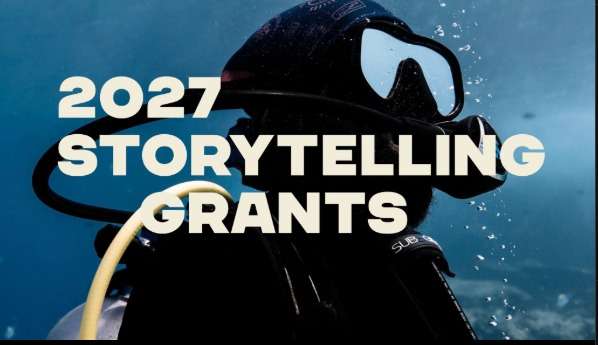
Creative storytellers, filmmakers, photographers, writers, illustrators, audio producers and ocean conservation advocates have an exciting opportunity to secure funding through the Ocean Culture Storytelling Grants Programme 2027.
Ocean Culture has opened applications for its 2027 Storytelling Grants Programme, an initiative designed to support creative individuals who want to tell compelling stories about the ocean, its ecosystems, cultural significance, environmental challenges and conservation.
The programme provides financial support of £1,000, £3,000 and £5,000 to selected storytelling projects, helping creators bring important ocean-related narratives to life and share them with wider audiences.
Open to members of the Ocean Culture community worldwide, the initiative welcomes storytelling projects in different creative formats, including film, photography, essays, audio and illustrations.
The programme aims to strengthen people’s relationship with the ocean by supporting stories that inspire emotional connections, communicate important knowledge and encourage action to protect marine environments.
Applicants can develop projects under three main storytelling themes: Inspire, Educate and Protect. These categories encourage creators to explore the beauty of the ocean, communicate information about marine science and culture, and highlight environmental threats alongside solutions that can support ocean conservation.
Applications for the 2027 programme opened on 2 November 2026 and will close on 1 December 2026 at midnight GMT. Successful applicants will be announced on 31 January 2027.
For creative professionals and emerging storytellers interested in ocean conservation, this programme provides an opportunity to obtain financial assistance, develop meaningful creative work and reach audiences beyond their immediate communities.
1. Overview of the Ocean Culture Storytelling Grants Programme 2027
The Ocean Culture Storytelling Grants Programme is an initiative that supports creators who use storytelling to strengthen public awareness, appreciation and understanding of the ocean.
Oceans play an essential role in maintaining the Earth’s ecological balance, supporting biodiversity, regulating the climate, sustaining livelihoods and contributing to the well-being of communities around the world.
Despite their importance, marine ecosystems face numerous environmental challenges, including pollution, habitat destruction, biodiversity loss, unsustainable human activities and the wider impacts of climate change.
Communicating these challenges effectively is important for encouraging public understanding and motivating conservation efforts.
Ocean Culture recognises that storytelling can be a powerful way to connect people with environmental issues. Through creative narratives, individuals can communicate complex environmental information in accessible and engaging ways.
The Storytelling Grants Programme therefore provides financial assistance and a platform for creators to develop and share stories that promote a deeper connection with the ocean.
The programme is open to different storytelling disciplines and creative approaches. It does not restrict applicants to a single artistic medium.
Instead, it encourages creators to explore different formats and perspectives to produce meaningful narratives that inspire, educate or promote ocean protection.
Key details of the opportunity
- Programme name: Ocean Culture Storytelling Grants Programme 2027.
- Funding organisation: Ocean Culture.
- Opportunity: Financial support for ocean storytelling projects.
- Available grant amounts: £1,000, £3,000 and £5,000.
- Application opening date: 2 November 2026.
- Application deadline: 1 December 2026.
- Deadline time: Midnight GMT.
- Announcement of winners: 31 January 2027.
- Eligible applicants: Members of the Ocean Culture community.
- Geographical eligibility: Worldwide.
- Eligible storytelling formats: Film, photography, essays, audio and illustrations.
- Main themes: Inspire, Educate and Protect.
- Membership requirement: Applicants must join the Ocean Culture community, which is free to join.
- Application method: Digital submission through the official platform.
2. What Is the Main Objective of the Ocean Culture Storytelling Grants?
The main objective of the Ocean Culture Storytelling Grants Programme is to connect people with the ocean through compelling, informative and inspiring stories.
The programme recognises that creative communication can help people understand why oceans matter and why protecting marine ecosystems should be a global priority.
Scientific reports, environmental research and conservation policies provide important information about ocean challenges. However, creative storytelling can communicate these issues in ways that encourage emotional engagement and make environmental subjects more accessible to different audiences.
For example, a documentary film can show how marine pollution affects coastal communities, while photography can capture the beauty of threatened marine ecosystems.
An essay can communicate the personal experiences of people whose livelihoods depend on the ocean, while an audio production can bring attention to underwater environments, marine conservation experiences or ocean-related cultural traditions.
Through these different creative approaches, Ocean Culture seeks to support narratives that can:
- Increase awareness of ocean conservation.
- Encourage people to appreciate marine ecosystems.
- Communicate important information about ocean science.
- Highlight the relationship between people and the ocean.
- Document environmental threats affecting marine environments.
- Showcase solutions to ocean-related challenges.
- Encourage public participation in ocean protection.
- Promote a stronger connection between communities and marine environments.
The programme also provides creators with an opportunity to communicate stories from different geographical, cultural and professional perspectives.
By supporting storytellers worldwide, Ocean Culture aims to amplify diverse voices and strengthen international conversations about ocean protection.
3. How Much Funding Is Available?
The Ocean Culture Storytelling Grants Programme 2027 offers three funding levels:
- £1,000 grant
- £3,000 grant
- £5,000 grant
These grants are intended to support the production and development of storytelling projects.
The funding can help creators cover production-related expenses and bring their proposed creative ideas to completion.
The programme also recognises that storytelling projects can differ significantly in terms of geographical location, production requirements, creative format and overall scope.
For this reason, the funding structure provides different grant amounts rather than requiring every applicant to work with the same financial allocation.
£1,000 storytelling grant
The £1,000 funding level provides support for storytelling projects with production requirements that can be accommodated within a relatively smaller budget.
This level may be suitable for creators developing focused creative projects that require limited production resources.
Examples of possible projects could include a photographic storytelling series, a short written narrative, an illustrated ocean story or a small-scale audio production.
£3,000 storytelling grant
The £3,000 funding level provides a larger financial allocation for projects that may require additional creative development and production resources.
This could be relevant for projects involving more extensive photography, documentary preparation, research, audio production or other storytelling activities.
£5,000 storytelling grant
The £5,000 funding level represents the largest grant amount available under the programme.
It can support storytelling projects with more substantial production requirements, depending on the applicant’s proposed concept and project scope.
Creators developing larger creative works or projects requiring additional production resources may find this funding level particularly relevant.
Important: The programme announcement identifies the three available funding amounts but does not specify the exact allocation criteria, detailed eligible expenditure categories or the number of grants available at each level. Applicants should consult the official Ocean Culture guidelines for these details.
4. Benefits of the Ocean Culture Storytelling Grants Programme
The programme offers more than financial assistance. It provides creators with an opportunity to develop important environmental stories and communicate them to wider audiences.
A. Financial support for creative production
The most direct benefit is the opportunity to receive financial assistance of £1,000, £3,000 or £5,000.
This funding helps reduce some of the financial barriers associated with developing and producing storytelling projects.
Creators can use production support to advance their ideas and work towards completing projects that communicate important ocean-related narratives.
B. Opportunity to reach global audiences
Successful applicants can benefit from exposure and support that helps their stories reach global audiences.
This is particularly valuable for storytellers whose projects focus on environmental challenges affecting communities and ecosystems that may not receive sufficient international attention.
Wider exposure can help important stories reach conservation organisations, environmental advocates, researchers, policymakers and members of the public.
C. Support for different creative disciplines
The programme welcomes different storytelling formats.
This creates opportunities for individuals with different artistic and professional backgrounds to participate.
Whether an applicant works in film, photography, writing, audio production or illustration, they can develop a proposal that communicates an important ocean-related story.
D. Opportunity to promote ocean conservation
The programme provides a platform for creators to communicate environmental issues and highlight the importance of marine conservation.
Through their work, successful applicants can help raise awareness about ocean pollution, biodiversity loss, habitat destruction and conservation solutions.
E. Freedom to develop diverse narratives
The programme encourages different perspectives and storytelling approaches.
Creators can explore the ocean through scientific, cultural, historical, personal, artistic or environmental perspectives, provided their proposals align with the programme’s objectives.
F. Contribution to global environmental awareness
By supporting creative projects from around the world, Ocean Culture seeks to increase public understanding of ocean-related challenges.
This can contribute to broader discussions about marine protection, sustainable practices and the importance of preserving ocean ecosystems for future generations.
5. The Three Main Storytelling Categories
The Ocean Culture Storytelling Grants Programme 2027 is structured around three main categories:
- Inspire.
- Educate.
- Protect.
These categories provide a framework for applicants to develop their creative proposals and communicate the purpose of their projects.
Category 1: Inspire – Stories That Create Emotional Connections with the Ocean
The Inspire category focuses on storytelling that encourages people to develop a stronger emotional connection with the ocean.
The programme recognises that people are more likely to appreciate and care about marine environments when they can connect with them through meaningful experiences and compelling narratives.
Stories in this category may explore the beauty of the ocean, personal encounters with marine environments and the cultural or emotional significance of the sea.
Possible storytelling approaches include:
- Photography documenting the beauty of marine ecosystems.
- Personal essays about experiences connected to the ocean.
- Films showcasing coastal environments and marine wildlife.
- Illustrations celebrating ocean landscapes and biodiversity.
- Audio stories capturing people’s experiences with the sea.
- Narratives exploring the relationship between coastal communities and marine environments.
For example, a photographer could develop a visual project documenting the beauty of coral reefs, while a filmmaker could tell the story of a community whose cultural identity is closely connected to the ocean.
The central objective is to inspire appreciation, curiosity and emotional engagement with marine environments.
Projects should demonstrate how their storytelling approach can encourage audiences to value the ocean and recognise its importance.
Category 2: Educate – Stories That Communicate Knowledge About the Ocean
The Educate category focuses on narratives that provide factual information and improve public understanding of ocean-related subjects.
The programme encourages creators to communicate knowledge about ocean science, marine ecosystems, culture and history.
This category is particularly relevant to storytellers who want to make important environmental information accessible to wider audiences.
Possible subjects include:
- Marine biodiversity and ocean ecosystems.
- Ocean science and research.
- The historical relationship between people and the sea.
- Coastal communities and maritime traditions.
- The importance of marine habitats.
- Ocean-related cultural practices.
- The environmental functions of marine ecosystems.
- The relationship between oceans and climate systems.
For example, a documentary creator could produce a film explaining the importance of coral reefs, while a writer could develop an educational essay about marine biodiversity.
A photographer could also combine images and explanatory narratives to communicate scientific information about underwater ecosystems.
Projects under this category should focus on providing useful, factual and accessible information that helps audiences better understand the ocean.
Category 3: Protect – Stories That Promote Ocean Conservation and Environmental Action
The Protect category focuses on storytelling that documents environmental threats and highlights solutions that can help protect the ocean.
This category is particularly relevant to creators interested in conservation, environmental advocacy and documenting the challenges affecting marine ecosystems.
The programme encourages stories that can contribute to greater awareness, public engagement and positive action.
Potential topics include:
- Marine plastic pollution.
- Ocean pollution and its consequences.
- Destruction of marine habitats.
- Biodiversity loss.
- Threats facing marine wildlife.
- Unsustainable fishing practices.
- Coastal ecosystem degradation.
- Climate change impacts on marine environments.
- Community-led ocean conservation initiatives.
- Innovative solutions for marine ecosystem protection.
For example, a filmmaker could document how plastic pollution affects a coastal community, while a photographer could create a visual series highlighting conservation initiatives protecting marine wildlife.
An essay writer could also explore how local communities are responding to environmental threats and promoting sustainable ocean management.
Projects in this category should demonstrate how storytelling can help promote conservation awareness, encourage environmental action or support policy change.
6. What Types of Storytelling Projects Are Eligible?
One of the major advantages of the Ocean Culture Storytelling Grants Programme is its openness to different creative formats.
The programme does not limit applicants to traditional written storytelling.
Instead, it recognises that ocean stories can be communicated through visual art, moving images, written narratives and audio productions.
The accepted formats identified in the announcement include the following.
A. Film and documentary production
Filmmakers can develop projects exploring different aspects of ocean life, marine ecosystems and conservation.
Possible project concepts include:
- Short documentary films about ocean conservation.
- Films documenting coastal communities.
- Stories about marine wildlife.
- Documentaries exploring ocean pollution.
- Films highlighting innovative conservation solutions.
- Personal stories about people’s relationships with the ocean.
Film can be an effective medium for combining interviews, environmental footage, narration and visual storytelling.
B. Photography
Photographers can submit projects that use images to communicate important ocean-related stories.
Photography projects may document marine ecosystems, coastal environments, ocean-related livelihoods, environmental challenges or conservation activities.
Possible approaches include:
- Underwater photography.
- Coastal landscape photography.
- Marine wildlife photography.
- Photo essays about fishing communities.
- Visual documentation of ocean pollution.
- Photography highlighting marine conservation work.
A strong photographic project should communicate a clear narrative rather than simply present unrelated images.
C. Essays and written storytelling
Writers can develop essays and other written narratives that explore the ocean from environmental, cultural, scientific or personal perspectives.
Potential subjects include:
- Personal experiences connected to the sea.
- The cultural significance of oceans.
- Marine conservation challenges.
- Ocean science and environmental education.
- The experiences of coastal communities.
- Stories about solutions to marine environmental problems.
Written storytelling can provide context, explain complex issues and communicate perspectives that may otherwise remain underrepresented.
D. Audio storytelling
Audio creators can develop productions that communicate ocean stories through sound, narration, interviews and other audio-based approaches.
Possible formats include:
- Audio documentaries.
- Interviews with marine conservation practitioners.
- Personal narratives about ocean experiences.
- Educational audio productions.
- Stories about coastal communities.
- Audio features exploring marine science and conservation.
Audio storytelling can make environmental narratives accessible to audiences who prefer listening to visual or written content.
E. Illustrations
Illustrators can use visual art to communicate ocean-related ideas and environmental stories.
Possible approaches include:
- Illustrations of marine wildlife.
- Artistic representations of ocean ecosystems.
- Visual narratives about conservation.
- Educational illustrations about marine biodiversity.
- Creative interpretations of people’s relationship with the sea.
- Illustrations documenting environmental threats and solutions.
Illustration can be particularly useful for communicating complex environmental ideas in accessible and engaging ways.
Important: The announcement specifically identifies film, photography, essays, audio and illustrations as accepted formats. Applicants should consult the official guidelines before assuming that other creative formats are eligible.
7. Who Is Eligible to Apply?
The Ocean Culture Storytelling Grants Programme is open to storytellers worldwide.
However, applicants must be members of the Ocean Culture community.
The announcement specifies that community membership is free to join, making the programme accessible to creators who want to participate without paying a membership fee.
The opportunity is intended for individuals interested in developing stories about the ocean through different creative formats.
Potential applicants include:
- Filmmakers.
- Documentary producers.
- Photographers.
- Essay writers.
- Journalists and creative writers.
- Audio storytellers.
- Illustrators.
- Visual artists working with storytelling.
- Environmental storytellers.
- Independent creators.
- Ocean conservation communicators.
These are examples of relevant creative backgrounds rather than a separate official list of eligible professions.
Is the opportunity open internationally?
Yes. The programme is described as being open to storytellers worldwide.
This means interested creators from eligible locations across Africa, Asia, Europe, North America, South America, the Caribbean, Oceania and other regions can potentially participate.
The opportunity is not restricted to applicants from a particular continent or nationality.
However, applicants must satisfy the Ocean Culture community membership requirement and any additional conditions specified in the official application guidelines.
Is previous professional experience required?
The announcement does not specify a minimum number of years of professional experience, an academic qualification or a particular educational background.
It also does not state that applicants must hold a university degree in filmmaking, journalism, marine biology, environmental science or another discipline.
Applicants should nevertheless prepare a clear and compelling storytelling proposal that demonstrates the relevance and potential impact of their project.
8. Why Ocean Storytelling Matters
Oceans are among the most important natural systems on Earth.
They support marine biodiversity, regulate global climate systems, provide food and livelihoods, and contribute to the economic and cultural well-being of millions of people.
Despite their importance, many ocean ecosystems are facing increasing environmental pressure.
Marine pollution, habitat degradation, unsustainable resource use and climate change threaten the health of ocean environments.
Addressing these challenges requires more than scientific research and conservation policies. Public awareness, education and community engagement are also essential.
Storytelling can help bridge the gap between environmental information and public understanding.
Making ocean science accessible
Scientific information about marine ecosystems can sometimes be difficult for the general public to understand.
Creative storytelling can translate important scientific findings into accessible narratives.
For example, a short documentary can explain how coral reefs support marine biodiversity, while an illustrated story can help younger audiences understand the importance of protecting marine habitats.
Giving coastal communities a voice
Many communities depend directly on oceans for their livelihoods, food security and cultural identity.
Their experiences can provide valuable insights into the environmental changes affecting marine environments.
Storytelling can create opportunities for these perspectives to reach wider audiences.
Highlighting environmental threats
Creative projects can document environmental problems that may not receive sufficient public attention.
Photographs, documentaries and written narratives can show how pollution, habitat destruction and other pressures affect marine ecosystems.
Promoting conservation solutions
Stories can also focus on successful conservation initiatives and innovative approaches to protecting the ocean.
By documenting positive examples, creators can encourage audiences to learn from existing solutions and support further conservation efforts.
Encouraging public participation
When audiences understand the importance of marine ecosystems, they may become more interested in supporting conservation activities and sustainable practices.
This is one of the central reasons why the Ocean Culture Storytelling Grants Programme places importance on inspiring, educating and protecting through storytelling.
9. How Will Applications Be Evaluated?
According to the programme announcement, applications will be assessed by a panel of judges.
The evaluation will consider three main criteria:
- Impact.
- Innovation.
- Vision.
These criteria are important for applicants developing their storytelling proposals.
A. Impact
Impact concerns the potential contribution of the proposed storytelling project.
Applicants should explain what they want their stories to achieve and how the project could influence audiences.
For example, a proposal might aim to increase awareness of marine pollution, promote understanding of ocean science or encourage support for local conservation initiatives.
A strong application should identify the intended audience and explain why the story matters.
B. Innovation
Innovation concerns the originality and creative approach of the proposed project.
Applicants should demonstrate what makes their storytelling concept interesting, distinctive or valuable.
This could involve an unusual narrative perspective, a creative visual approach, an innovative way of communicating scientific information or a fresh approach to documenting environmental challenges.
Innovation does not necessarily mean using expensive technology. A compelling story told through a thoughtful and original approach can also demonstrate creativity.
C. Vision
Vision concerns the overall direction, purpose and potential of the proposed storytelling project.
Applicants should communicate a clear understanding of the story they want to tell and why it is important.
They should also explain how their proposed creative approach connects with the objectives of the Ocean Culture programme.
A well-developed proposal should demonstrate a clear narrative direction and a meaningful reason for telling the story.
Application advice: Since impact, innovation and vision are the stated assessment criteria, applicants should ensure that their proposals address all three rather than focusing exclusively on the production budget or creative format.
Interested storytellers should complete the application process through the official Ocean Culture platform.
The programme announcement identifies digital submission as the application method.
Applicants can follow these general steps:
Step 1: Join the Ocean Culture community
The first requirement is to become a member of the Ocean Culture community.
Membership is free.
Applicants should ensure that they have completed the membership process before submitting their grant applications.
Step 2: Review the programme information
Visit the official Ocean Culture website and review the Storytelling Grants Programme information.
Pay attention to the available funding levels, application conditions, accepted storytelling formats and submission requirements.
Step 3: Choose a storytelling category
Develop a project that fits one of the three main categories:
- Inspire: Stories that create emotional connections with the ocean through beauty and personal experiences.
- Educate: Narratives that communicate factual information about ocean science, culture, history and ecosystems.
- Protect: Projects documenting environmental threats and solutions while promoting conservation and policy change.
Applicants should identify the category that best reflects the purpose of their project.
Step 4: Develop your storytelling concept
Prepare a clear project idea explaining the story you want to tell.
Your concept should communicate:
- The subject of the proposed story.
- Why the story is important.
- The relationship between the project and ocean-related issues.
- The intended storytelling format.
- The audience you want to reach.
- The expected impact of the project.
- How your approach demonstrates innovation and vision.
Step 5: Consider the appropriate funding level
The programme offers three funding amounts:
- £1,000.
- £3,000.
- £5,000.
Consider the production requirements and scope of your project when reviewing the available funding levels.
The announcement does not provide a detailed breakdown of eligible expenses or the precise criteria for assigning each grant amount, so applicants should consult the official guidelines.
Step 6: Submit your application digitally
Complete the application through the official platform in accordance with the programme’s instructions.
Ensure that all required information is provided and that your submission clearly communicates the project’s purpose and relevance.
Step 7: Submit before the deadline
Applications must be submitted by 1 December 2026 at midnight GMT.
Applicants should avoid waiting until the final hours to complete their submissions.
Step 8: Wait for the announcement of successful applicants
The programme has scheduled the announcement of winners for 31 January 2027.
Applicants should monitor the official Ocean Culture platform for updates and further information.
11. Important Application Dates
Applicants should take note of the following dates when preparing their submissions.
| Activity | Date |
|---|---|
| Applications open | 2 November 2026 |
| Application deadline | 1 December 2026 |
| Deadline time | Midnight GMT |
| Winners announced | 31 January 2027 |
The deadline is particularly important for international applicants because the programme specifies Greenwich Mean Time (GMT).
Applicants should ensure that their digital submissions are completed before midnight GMT on 1 December 2026.
Late applications should not be assumed to be accepted.
Click HERE for more information about Ocean Culture Storytelling Grants 2027.
12. Tips for Preparing a Competitive Storytelling Proposal
Although the programme welcomes different creative formats, applicants should take time to develop a compelling and well-structured project concept.
The following recommendations can help strengthen an application.
Choose a focused ocean-related story
Rather than attempting to cover every aspect of ocean conservation, identify a specific story that can be explored effectively.
For example, a project could focus on one coastal community, one marine ecosystem, one environmental challenge or one conservation initiative.
A focused subject can help make the narrative more engaging and coherent.
Select the most suitable storytelling format
Choose a format that fits the story you want to communicate.
A photographic essay may be suitable for documenting changes in a coastal environment, while a documentary film may be more appropriate for combining interviews and visual evidence.
Similarly, an essay may work well for communicating historical or cultural perspectives.
Make the purpose of the project clear
Explain whether your project is primarily intended to inspire, educate or promote ocean protection.
Your proposal should clearly demonstrate its relationship with one of the programme’s three storytelling categories.
Demonstrate potential impact
Explain why the story matters and what audiences may learn, understand or do after engaging with it.
Consider how your work could contribute to ocean awareness and conservation discussions.
Present an innovative approach
Show what makes your project distinctive.
This could involve an original narrative, a new perspective, a creative production technique or a previously underrepresented story.
Develop a realistic project scope
Consider the time, resources and production activities required to complete the project.
The proposed funding should be appropriate for the scale and requirements of the storytelling work.
Pay attention to the application guidelines
Always follow the official instructions.
The information published in the announcement provides an overview of the programme, but the official Ocean Culture platform should be consulted for the complete application requirements.
13. Why This Opportunity Is Important for Storytellers Worldwide
The Ocean Culture Storytelling Grants Programme offers an opportunity for creative individuals to combine their artistic abilities with environmental awareness and conservation communication.
For many storytellers, producing a meaningful creative project requires financial resources that may not always be readily available.
Documentary production, photography, research, illustration and audio storytelling can involve significant expenses.
The grants provide financial assistance that can help creators overcome some of these barriers and develop their ideas.
The international nature of the programme is also important.
Ocean-related environmental challenges affect communities across the world, but the experiences and perspectives of those communities are not always equally represented in global environmental conversations.
By welcoming storytellers worldwide, Ocean Culture creates an opportunity for different voices and experiences to contribute to a broader understanding of the ocean.
A storyteller in an African coastal community, for example, may document the relationship between local livelihoods and marine ecosystems.
A photographer in Southeast Asia may highlight the importance of coral reef conservation, while a filmmaker in Latin America may explore the environmental challenges facing fishing communities.
These different perspectives can help audiences understand that ocean conservation is a shared global responsibility.
Ultimately, the programme recognises that stories can influence how people perceive the environment and inspire them to take an interest in protecting it.
14. Official Application Link and Further Information
Interested applicants should visit the official Ocean Culture website to access the Storytelling Grants Programme information and application platform.
Programme: Ocean Culture Storytelling Grants Programme 2027
Official website: https://oceanculture.life/
Applicants should locate the Storytelling Grants Programme section and review the latest application instructions.
Before submitting, ensure that you:
- Have joined the Ocean Culture community.
- Have developed a project that aligns with Inspire, Educate or Protect.
- Have reviewed the available grant amounts.
- Have checked the official application requirements.
- Have prepared the information required for digital submission.
- Can submit before the stated deadline.
Application deadline: 1 December 2026 at midnight GMT.
Winners announced: 31 January 2027.
Conclusion
The Ocean Culture Storytelling Grants Programme 2027 is an exciting opportunity for creative individuals who want to use storytelling to promote ocean awareness, communicate environmental knowledge and encourage marine conservation.
With funding opportunities of £1,000, £3,000 and £5,000, the programme provides financial assistance for creators working across film, photography, essays, audio and illustration.
Its three central themes, Inspire, Educate and Protect, offer different ways for storytellers to explore the ocean and communicate its importance to audiences around the world.
Whether through a documentary about marine conservation, a photographic series highlighting ocean biodiversity, an essay exploring coastal cultures or an audio production sharing important environmental experiences, creators can use their talents to tell stories that matter.
In addition to financial assistance, successful applicants can benefit from exposure and support to bring their stories to global audiences.
The programme is open to members of the Ocean Culture community worldwide, and joining the community is free.
Interested storytellers should begin developing their project concepts, review the official application requirements and ensure their submissions are completed on time.
The application deadline is 1 December 2026 at midnight GMT, while successful applicants will be announced on 31 January 2027.
If you have a powerful ocean story to tell, this is an opportunity to bring it to life, reach new audiences and contribute to the global movement for ocean awareness and conservation.
Official website: https://oceanculture.life