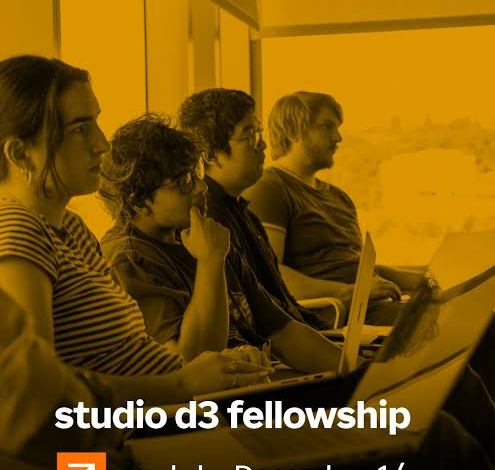
The Allen Institute Studio D3 Fellowship is inviting applications from recent PhD graduates interested in applying mathematics, computation and data science to complex biological questions.
The three-year fellowship is designed to bring scientists from quantitative and mathematical disciplines into a highly collaborative biological research environment. Importantly, applicants do not need previous experience in biology to apply.
The programme is particularly suited to recent PhD graduates in fields such as computer science, statistics, mathematics, physics, electrical engineering and other quantitative disciplines who want to explore biological research using computational and theoretical approaches.
For the Fall 2027 intake, applications open on 15 September 2026 and close on 1 December 2026.
Selected candidates will be invited to virtual talks on 8 and 9 February 2027, followed by in-person interviews for a subset of candidates on 8 and 9 March 2027.
What Is the Studio D3 Fellowship?
Studio D3, meaning data-driven discovery, is an initiative of the Allen Institute designed to bring quantitative researchers into biological science.
The fellowship focuses on using mathematics, computation and data science to investigate complex biological systems.
Fellows work alongside Allen Institute scientists and a global network of Affiliates in a collaborative, open-science environment. The programme gives researchers room to explore innovative computational research questions while connecting their expertise to biological discovery.
The Allen Institute’s research spans areas including brain science, cell science, neural dynamics, immunology, synthetic biology and AI-driven research.
What Does the Fellowship Offer?
The Studio D3 Fellowship is a three-year programme for recent PhD graduates.
Selected fellows will be employed by the Allen Institute and receive a starting annual salary of $111,100, together with immigration support and a benefits package.
Key features include:
- Three-year fellowship programme
- Starting salary of $111,100 per year
- Employment with the Allen Institute
- Immigration support for international applicants
- Benefits package
- Mentorship from Allen Institute scientists and Affiliates
- Freedom to explore novel computational research areas
- Collaborative research environment
- Opportunities to apply quantitative methods to biological questions
- Access to a wider scientific community
- Up to three fellows selected each year
The fellowship is designed to provide researchers with the freedom to develop ideas while receiving scientific guidance and professional support.
Biology Experience Is Not Required
One of the most distinctive features of the Studio D3 Fellowship is that applicants do not need previous biology experience.
The programme specifically seeks researchers with expertise in quantitative disciplines who may bring new perspectives to biological questions.
Relevant backgrounds can include:
- Computer science
- Mathematics
- Statistics
- Physics
- Electrical engineering
- Computational science
- Other quantitative fields
Applicants who already have biological research experience can apply, but candidates coming from quantitative disciplines without a biology background are also encouraged to consider the fellowship.
The application process also includes a mock research proposal. Candidates who are new to biology will not be expected to demonstrate biological knowledge they have not yet had the opportunity to acquire.
Who Is Eligible?
Applicants must be scientists who hold a PhD or equivalent qualification, or who will have completed their PhD by the beginning of the fellowship.
The PhD should have been awarded within the three years preceding the fellowship.
The programme is particularly appropriate for researchers with doctoral training in quantitative areas such as computer science, electrical engineering, physics, mathematics or statistics.
International applicants are eligible, and the Allen Institute states that immigration support is provided.
Up to three fellows will be selected each year.
Application Materials
Applicants are required to prepare several components demonstrating their academic background, research experience and future interests.
The application materials include:
- Curriculum vitae (CV)
- Two letters of support from a mentor and other professors or scientists with whom the applicant has worked
- One-page personal statement describing the applicant’s history, activities and interests as an individual
- Two-page research statement describing previous research, potential research interests, familiar tools and career goals
- One-page mock research proposal describing a biological question of interest and how the applicant would approach it using their existing skill set
The personal statement is intended to provide the selection committee with a broader understanding of the applicant, including activities and interests outside science.
The research statement should connect previous work with potential research directions and explain how the fellowship fits into the applicant’s career plans.
How the Selection Process Works
Applications for the Fall 2027 fellowship open on 15 September 2026 and close on 1 December 2026.
Selected candidates will be invited to deliver virtual talks on 8–9 February 2027.
Following those talks, a subset of candidates will be invited to participate in in-person interviews on 8–9 March 2027.
Applicants should therefore begin preparing their research statements, proposal and letters of support well before the December deadline.
Why Quantitative Scientists Should Consider Biological Research
Modern biology increasingly depends on large datasets, mathematical modelling, computational analysis and sophisticated technologies.
Questions involving cells, brains, immune systems and other biological systems can require methods traditionally associated with mathematics, physics, computer science and engineering.
Studio D3 is designed around this intersection.
For quantitative scientists who want to move into biological research, the fellowship provides an opportunity to apply existing technical skills to biological questions while developing new expertise through collaboration and mentorship.
The programme may also be relevant to researchers interested in computational biology, AI, systems biology, mathematical biology, biological data science and related interdisciplinary areas.
How to Apply for the Allen Institute Studio D3 Fellowship
Applications for Fall 2027 close on 1 December 2026.
Applicants should review the official fellowship requirements and prepare all application materials before submitting their application.
Apply here: Allen Institute Studio D3 Fellowship Application
Application details: Allen Institute Studio D3 Fellowship information
International applicants should pay particular attention to the eligibility requirements and immigration-support information provided by the Allen Institute.
Allen Institute Studio D3 Fellowship 2027: Key Details
| Detail | Information |
|---|---|
| Fellowship | Studio D3 Fellowship |
| Institution | Allen Institute |
| Duration | 3 years |
| Intake | Fall 2027 |
| Starting salary | $111,100 annually |
| PhD requirement | PhD or equivalent |
| PhD timing | Awarded within the last 3 years |
| Biology experience | Not required |
| International applicants | Eligible |
| Fellows selected | Up to 3 annually |
| Applications open | 15 September 2026 |
| Deadline | 1 December 2026 |
| Virtual talks | 8–9 February 2027 |
| In-person interviews | 8–9 March 2027 |
Final Thoughts
The Allen Institute Studio D3 Fellowship provides recent quantitative PhD graduates with an opportunity to move into interdisciplinary biological research while remaining connected to their existing computational, mathematical or scientific expertise.
With a three-year programme, $111,100 starting annual salary, benefits, immigration support for international applicants and mentorship from leading scientists, the fellowship is structured as an employment-based research opportunity rather than a conventional scholarship.
Researchers interested in applying mathematics, computation and data science to biological discovery should review the official requirements and begin preparing their application materials ahead of the 1 December 2026 deadline.