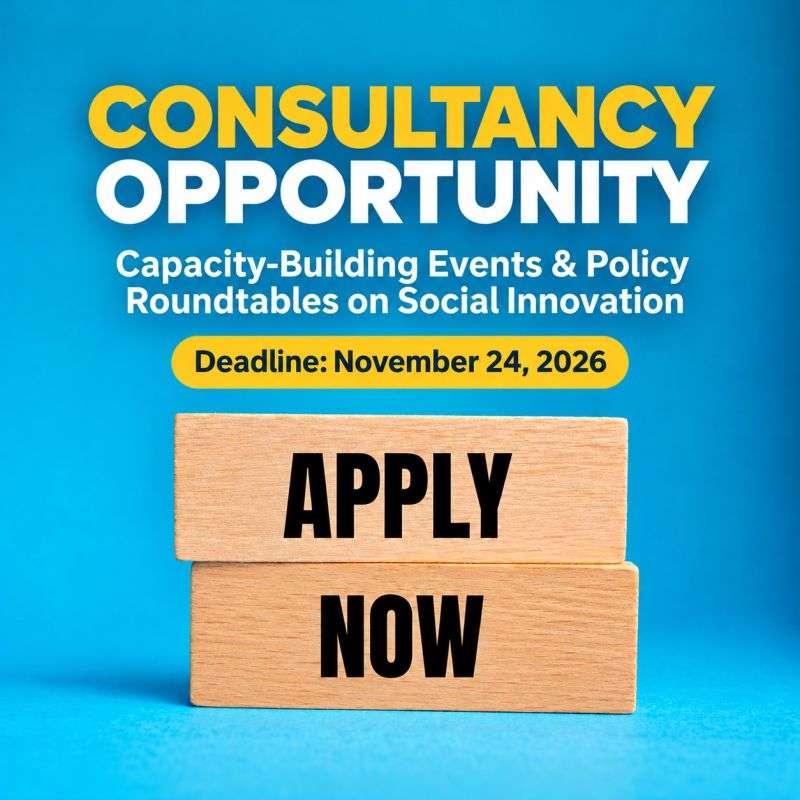
The Caribbean Export Development Agency (Caribbean Export) has reopened applications for an international consultancy opportunity focused on strengthening social innovation institutions and supporting the development of inclusive social entrepreneurship ecosystems across the Caribbean. Through the European Union-funded EU-LAC Social Accelerator Programme, qualified consultants, experts and organisations are invited to submit proposals to design and deliver capacity-building workshops and policy roundtables in Jamaica, the Dominican Republic, Barbados and Trinidad and Tobago.
The assignment will bring together European expertise, social innovation models and practical policy approaches to strengthen institutions that support social entrepreneurs. The selected consultant or organisation will work with stakeholders in all four beneficiary countries to improve institutional capacity, facilitate policy discussions and support the implementation of recommendations contained in national social innovation roadmaps.
Applications are open to individuals and organisations with substantial professional experience in social innovation, social entrepreneurship, innovation policy or ecosystem development. Applicants must demonstrate strong facilitation capabilities, knowledge of European social innovation practices and the ability to work professionally in both English and Spanish.
The application deadline has been extended to 24 November 2026 at 5:00 PM Atlantic Standard Time (AST).
About the Caribbean Export Development Agency
The Caribbean Export Development Agency, commonly known as Caribbean Export, is a regional trade and investment promotion agency committed to building a resilient Caribbean through support for the private sector.
The agency works to strengthen business competitiveness, encourage investment, promote innovation and support economic development throughout the Caribbean region. Its activities include providing technical assistance, facilitating partnerships and implementing programmes that help businesses and institutions access opportunities for growth.
Through its work, Caribbean Export contributes to the development of a stronger regional economic environment and supports initiatives that improve the competitiveness and resilience of Caribbean enterprises.
About the EU-LAC Social Accelerator Programme
The consultancy is being implemented through the EU-LAC Social Accelerator Programme, which receives financial support from the European Union.
The programme focuses on strengthening social innovation and social entrepreneurship ecosystems by supporting institutions, improving capacities and encouraging the development of policies that create enabling environments for inclusive development.
Social innovation involves developing and implementing new approaches, products, services, business models or collaborations that respond to social and environmental challenges. Unlike conventional approaches that focus primarily on commercial returns, social innovation places significant emphasis on addressing community needs and generating positive social outcomes.
Social entrepreneurship applies entrepreneurial approaches to solving social problems. Social enterprises can operate in different sectors, including education, healthcare, agriculture, environmental protection, financial inclusion, employment and community development.
However, social entrepreneurs often require supportive institutions, appropriate policies, technical expertise and access to networks to establish and scale their initiatives. This is the wider challenge that the EU-LAC Social Accelerator Programme seeks to address.
The consultancy will contribute to this objective by strengthening the institutions that support social innovation in four Caribbean countries.
Countries Covered by the Consultancy
The assignment will be implemented in four beneficiary countries:
1. Jamaica
The selected consultant will deliver a full-day workshop and policy roundtable in Jamaica. The activities will focus on strengthening the capacity of institutions supporting social innovation and identifying practical actions to advance the country’s social innovation policy recommendations.
2. Dominican Republic
The consultancy will also include a full-day capacity-building workshop and policy roundtable in the Dominican Republic. The selected expert or organisation will facilitate discussions and share relevant European approaches that can support the country’s social innovation ecosystem.
3. Barbados
In Barbados, the consultant will work with relevant institutions and stakeholders to strengthen their knowledge and capacity in social innovation. The workshop and policy roundtable will be adapted to national needs and priorities.
4. Trinidad and Tobago
The assignment will include a similar full-day workshop and policy roundtable in Trinidad and Tobago, with an emphasis on institutional capacity-building, policy dialogue and the implementation of recommendations developed through the national social innovation roadmap.
Important: The consultancy is awarded under one contract covering all four countries. Applicants must demonstrate the ability to deliver the complete assignment across Jamaica, the Dominican Republic, Barbados and Trinidad and Tobago. Proposals covering only one, two or three of the beneficiary countries will not be accepted.
Objectives of the Social Innovation Consultancy
The main objective is to strengthen the capacity of institutions supporting social innovation across the four beneficiary countries.
The consultancy will use European expertise, established models and practical experiences to help institutions understand how social innovation ecosystems can be developed and strengthened.
The assignment also seeks to support the implementation of policy recommendations developed through national social innovation roadmaps.
These roadmaps provide direction for strengthening the environment in which social enterprises and other innovation-driven initiatives operate. However, policy recommendations need to be translated into practical actions, supported by capable institutions and implemented through collaboration among relevant stakeholders.
The selected consultant will therefore help bridge the gap between policy development and implementation by facilitating discussions, sharing relevant experiences and identifying concrete steps that stakeholders can take.
The broader objectives include:
- Strengthening institutional knowledge and practical capacity in social innovation.
- Sharing relevant European social innovation models and best practices.
- Supporting dialogue between public and private sector stakeholders.
- Identifying concrete actions for implementing national social innovation policy recommendations.
- Encouraging collaboration among institutions supporting social entrepreneurship.
- Developing practical training materials and tools that participants can use beyond the workshops.
- Assessing progress through online follow-up sessions.
- Documenting outcomes and providing recommendations for continued capacity-building and policy support.
Scope of Work and Responsibilities of the Selected Consultant
The selected consultant or organisation will be responsible for designing, delivering, reviewing and documenting the activities across all four beneficiary countries.
The assignment consists of several interconnected responsibilities.
1. Designing and Delivering Four Full-Day Workshops
The consultant will design and deliver four integrated, full-day workshops, with one workshop taking place in each beneficiary country.
The workshops will combine capacity-building sessions with policy roundtables. This integrated approach is intended to ensure that participants gain practical knowledge while also engaging in discussions about the policies and institutional arrangements needed to strengthen social innovation.
The workshops should be tailored to the specific needs and circumstances of each country rather than relying on an identical approach for all four locations.
The consultant will therefore need to understand the national context, relevant stakeholders and priorities in each beneficiary country.
The capacity-building component may draw on European experience and relevant models to strengthen participants’ understanding of social innovation and the development of supportive ecosystems.
2. Facilitating Policy Roundtables
In addition to training, the consultancy requires the facilitation of policy roundtables.
These discussions will bring together relevant stakeholders to examine policy recommendations developed through national social innovation roadmaps and identify practical ways of implementing them.
The roundtables are intended to encourage meaningful dialogue and collaboration between public and private sector actors.
The consultant will need to create an environment in which participants can exchange ideas, identify institutional challenges and discuss actions that can improve the conditions for social entrepreneurship and inclusive development.
The assignment requires more than simply presenting information. The consultant must be able to facilitate discussions that lead to concrete recommendations and practical next steps.
3. Sharing European Social Innovation Best Practices
A central component of the assignment is the transfer of relevant European expertise and experience.
The consultant will share European social innovation models, best practices and approaches that may be useful in strengthening the Caribbean social innovation ecosystem.
This will require a strong understanding of how social innovation is supported within European contexts, including the role of institutions, policies, partnerships and ecosystem development.
Applicants should demonstrate that they can identify relevant practices and adapt them to the needs of the four beneficiary countries.
The objective is not simply to replicate European approaches but to help Caribbean stakeholders understand which models and practices may be applicable to their national circumstances.
4. Developing Training Materials, Presentations and Practical Tools
The selected consultant will prepare the materials required to support the capacity-building activities.
These deliverables include:
- Training materials.
- Workshop presentations.
- Practical tools for participants.
- Supporting resources relevant to social innovation and policy implementation.
The materials should help participants understand the subject matter and provide practical guidance that can support their work after the workshops.
They should also be appropriate for the different institutional and national contexts covered by the assignment.
5. Conducting Online Follow-Up Review Sessions
The consultancy does not end when the four workshops have been completed.
The selected consultant will conduct an online follow-up review session with participants in each beneficiary country.
These sessions will be used to assess progress, gather feedback and review the extent to which participants have been able to apply the knowledge and recommendations discussed during the workshops.
The follow-up activities will also help identify continuing capacity-building needs and areas where additional policy support may be necessary.
6. Preparing a Consolidated Consultancy Report
At the end of the assignment, the consultant or organisation must prepare a consolidated report documenting the outcomes of activities across all four countries.
The report should bring together the main findings, workshop outcomes and relevant recommendations.
It will provide a record of the consultancy’s contribution to institutional capacity-building and the implementation of social innovation policy recommendations.
The report will also include recommendations for further capacity-building and policy support, helping stakeholders identify areas that require continued attention after the consultancy has ended.
Who Can Apply for the Caribbean Export Consultancy?
The opportunity is open to qualified individual consultants and organisations with substantial professional experience in social innovation and related fields.
Applicants should have at least six years of professional experience in one or more of the following areas:
- Social innovation.
- Social entrepreneurship.
- Innovation policy.
- Social innovation ecosystem development.
The required experience should demonstrate an understanding of how social innovation initiatives are developed, supported and integrated into wider economic and policy environments.
Applicants must also have substantial experience within the European Union. This is particularly relevant because the assignment requires the selected consultant to share European expertise, models and best practices with stakeholders in the four Caribbean beneficiary countries.
Essential Professional Skills and Experience
In addition to the minimum experience requirement, the consultancy identifies several important professional competencies.
Strong Facilitation Skills
Applicants must demonstrate the ability to design and facilitate workshops, capacity-building activities and policy discussions.
The assignment involves working with different stakeholders, including public and private sector institutions. Strong facilitation skills will therefore be necessary to manage discussions, encourage participation and guide stakeholders towards practical outcomes.
Knowledge of European Social Innovation Models
The selected consultant must have a strong understanding of European approaches to social innovation.
Applicants should demonstrate familiarity with relevant models, institutional arrangements, policies and practices that support social entrepreneurship and inclusive development.
The ability to translate European experiences into practical lessons for Caribbean institutions will be important.
Experience Engaging Public and Private Sector Stakeholders
The consultancy requires collaboration with different stakeholders involved in social innovation.
Applicants should therefore have experience working with public institutions, private sector organisations and other relevant actors.
They should be comfortable facilitating discussions involving different institutional perspectives and helping participants identify shared priorities.
Professional Proficiency in English and Spanish
The consultant or consultancy team must be proficient in both English and Spanish.
This is a mandatory requirement because the assignment covers countries with different working-language contexts. The selected consultant must be able to facilitate workshops, policy discussions and follow-up sessions professionally in both languages.
It is not sufficient to demonstrate proficiency in only one of the two languages.
Applicants should consult the updated Terms of Reference for the complete qualification and experience requirements.
Consultancy Duration and Implementation Schedule
The consultancy is expected to commence in early January 2027 and continue for approximately two months.
The planned implementation schedule includes:
- Early January 2027: Expected commencement of the consultancy.
- Late January to mid-February 2027: Planned country missions and delivery of the four workshops and policy roundtables.
- Following the workshops: Online follow-up review sessions with participants in each country.
- By 28 February 2027: All consultancy activities must be completed.
The selected consultant will need to organise and coordinate the activities across all four countries within the available timeframe.
This requires effective planning, preparation of training materials, coordination with stakeholders and timely completion of the final consolidated report.
Applicants should ensure that they have the professional availability and operational capacity to deliver the entire assignment within the specified period.
Application Requirements: Documents to Submit
Interested individual consultants and organisations must submit a complete proposal containing the required technical, financial and professional documentation.
The application must include the following:
1. Technical Proposal – Maximum Four Pages
Applicants must prepare a technical proposal of no more than four pages.
The proposal should demonstrate an understanding of the consultancy assignment and explain how the applicant intends to deliver the required activities across all four beneficiary countries.
It should outline:
- The applicant’s understanding of the objectives and scope of work.
- The proposed approach to designing and delivering the four workshops.
- The methodology for integrating capacity-building sessions and policy roundtables.
- How European social innovation practices will be shared and adapted to national contexts.
- The approach to stakeholder engagement and policy dialogue.
- The proposed online follow-up review activities.
- The methodology for documenting outcomes and preparing the consolidated report.
The technical proposal should cover all four countries. Applicants should not submit a proposal limited to only some of the beneficiary countries.
2. Financial Proposal in Euros
Applicants must submit a financial proposal expressed in euros.
The proposal should communicate the financial cost of delivering the consultancy assignment.
Since the assignment covers four countries under a single contract, applicants should prepare their financial proposal with the complete scope of work in mind.
The financial proposal should be consistent with the proposed methodology and the activities required under the Terms of Reference.
3. Curriculum Vitae or Organisational Profile – Maximum Four Pages
Individual consultants must submit a curriculum vitae of no more than four pages.
Organisations should instead provide an organisational profile demonstrating their relevant qualifications and experience.
The submitted document should highlight experience in areas such as:
- Social innovation.
- Social entrepreneurship.
- Innovation policy.
- Ecosystem development.
- Capacity-building and training.
- Policy dialogue and stakeholder engagement.
- European social innovation models and practices.
- Relevant assignments in the European Union and other international contexts.
Applicants should prioritise experience that directly relates to the consultancy’s requirements.
4. At Least Two References or a Recommendation Letter
Applicants must provide at least two references from similar assignments.
Alternatively, they may submit a letter of recommendation from an EU Delegation or an EU-LAC Social Accelerator consortium partner.
The references should help demonstrate the applicant’s previous experience and ability to deliver comparable consultancy assignments.
Applicants should ensure that the references are relevant to the proposed work and that the information provided is accurate.
5. Completed and Signed Applicant Declaration Form
A completed and signed Applicant Declaration Form must also be included in the application package.
Applicants should obtain and complete the relevant declaration form as part of their submission.
The full application requirements and any additional documentation instructions should be checked against the updated Terms of Reference.
Interested consultants and organisations should prepare the required documents and submit their proposals by email.
Follow these steps:
Step 1: Review the Terms of Reference
Download and carefully examine the updated Terms of Reference to understand the full scope of work, detailed qualification requirements, expected deliverables and application conditions.
Step 2: Prepare the Technical Proposal
Develop a technical proposal of no more than four pages outlining your understanding of the assignment and the proposed approach and methodology for delivering the activities across Jamaica, the Dominican Republic, Barbados and Trinidad and Tobago.
Step 3: Prepare the Financial Proposal
Prepare a financial proposal in euros covering the complete assignment.
Step 4: Prepare Your CV or Organisational Profile
Submit a CV of no more than four pages if applying as an individual consultant, or an organisational profile if applying as an organisation.
Ensure that the document demonstrates the relevant professional experience and qualifications.
Step 5: Include References or a Recommendation Letter
Attach at least two references from similar assignments or a recommendation letter from an EU Delegation or an EU-LAC Social Accelerator consortium partner.
Step 6: Complete the Applicant Declaration Form
Ensure that the declaration form is properly completed and signed.
Step 7: Submit Your Application by Email
Send the complete application package to:
Email: eulacsocial@carib-export.com
Required email subject:
EU EXPERT CAPACITY BUILDING PROPOSAL [Name of Consultant]
Applicants should replace the placeholder with the name of the individual consultant or organisation submitting the proposal.
Application Deadline
has been superseded by the reopened application deadline.
New application deadline: 24 November 2026 at 5:00 PM Atlantic Standard Time (AST).
Applications must be submitted to the designated email address by the stated deadline.
Interested applicants are encouraged to prepare their documents early, review the updated Terms of Reference and ensure that their proposals address the entire assignment.
Click HERE for more information about Caribbean Export Consultancy 2026.
Important Application Considerations
Before submitting a proposal, applicants should take note of the following requirements:
- The assignment covers all four countries: Proposals must address Jamaica, the Dominican Republic, Barbados and Trinidad and Tobago. Applications covering only some of the countries will not be accepted.
- Minimum six years of experience: Applicants should demonstrate at least six years of relevant professional experience in social innovation, social entrepreneurship, innovation policy or ecosystem development.
- European Union experience is important: Applicants must have substantial experience within the European Union.
- Bilingual proficiency is mandatory: The consultant or team must be proficient in both English and Spanish and able to facilitate professional discussions in both languages.
- The technical proposal has a page limit: The technical proposal must not exceed four pages.
- The CV or organisational profile has a page limit: The submitted CV or organisational profile must not exceed four pages.
- A financial proposal is required: The financial proposal must be presented in euros.
- References are required: Applicants must provide at least two references from similar assignments or an eligible recommendation letter.
- The declaration form must be signed: The completed and signed Applicant Declaration Form is part of the required submission package.
- The deadline has been extended: The new deadline is 24 November 2026 at 5:00 PM AST.
Conclusion
The Caribbean Export Consultancy on Capacity-Building Events and Policy Roundtables on Social Innovation presents an opportunity for experienced consultants and organisations to contribute to the development of stronger social innovation ecosystems across Jamaica, the Dominican Republic, Barbados and Trinidad and Tobago.
Through the EU-LAC Social Accelerator Programme, the selected consultant will help strengthen institutional capacity, facilitate policy dialogue, share European social innovation practices and support the implementation of national social innovation roadmap recommendations.
The assignment requires a combination of technical expertise, practical facilitation experience, policy knowledge, stakeholder engagement skills and bilingual proficiency in English and Spanish. Applicants must also demonstrate substantial European Union experience and the ability to deliver the complete consultancy across all four countries.
Qualified experts and organisations interested in contributing to social innovation and inclusive development in the Caribbean should review the updated Terms of Reference and prepare a comprehensive proposal covering the full assignment.
Interested applicants must submit their complete proposals by 24 November 2026 at 5:00 PM Atlantic Standard Time (AST) to eulacsocial@carib-export.com.