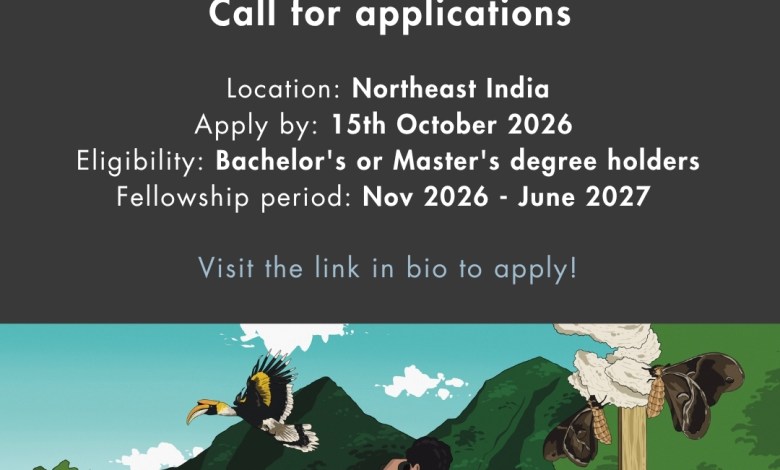
The Nature–Culture Fellowship, now entering its fifth year in partnership with Canopy Collective, is inviting applications from early-career professionals and recent Bachelor’s or Master’s degree holders interested in exploring the connections between people, culture and nature.
The seven-month fellowship offers participants an opportunity to undertake full-time fieldwork in Northeast India, documenting the diverse ways communities interact with and understand the natural world.
Through fieldwork, interviews and creative storytelling, fellows will investigate cultural expressions and traditions connected to nature, including art forms, folklore, festivals, beliefs and other forms of human–nature relationships.
The programme combines creative documentation with systematic and scientific approaches, making it relevant to applicants interested in culture, ecology, anthropology, conservation, research, storytelling and interdisciplinary work.
What Is the Nature–Culture Fellowship?
The Nature–Culture Fellowship is a field-based programme focused on understanding and documenting relationships between humans and the natural environment.
The fellowship approaches these relationships from both creative and research-oriented perspectives. Fellows will spend time in communities, conduct interviews, observe cultural practices and document their findings through appropriate storytelling and research methods.
The programme provides an opportunity to explore how cultural traditions, beliefs and creative expressions can reflect people’s relationships with their surrounding ecosystems.
Now in its fifth year, the fellowship continues its partnership with Canopy Collective, bringing together field research and creative approaches to understanding nature and culture.
What Will Fellows Explore?
Fellows will investigate a broad range of cultural practices and expressions that demonstrate connections between people and nature.
Areas of exploration may include:
- Traditional art forms
- Folklore and oral traditions
- Festivals
- Cultural traditions
- Beliefs and worldviews
- Community relationships with nature
- Local knowledge
- Human–environment interactions
- Other cultural expressions connected to the natural world
The fellowship encourages participants to approach these subjects through systematic and scientific documentation, while also using creative storytelling to communicate what they discover.
This combination can be particularly valuable for people interested in interdisciplinary research that connects environmental and cultural perspectives.
A major component of the fellowship is fieldwork in Northeast India.
Fellows will engage directly with communities and environments while documenting human–nature relationships. This can involve conducting interviews, gathering information, observing cultural practices and developing stories based on field experiences.
The field-based structure means fellows should be prepared to work outside conventional office environments and engage respectfully with communities and local contexts.
Applicants should therefore demonstrate curiosity, adaptability and an ability to work independently while carrying out research in the field.
Who Can Apply?
The fellowship is aimed at early-career professionals and recent graduates.
Eligible applicants may include individuals who have recently completed a:
- Bachelor’s degree
- Master’s degree
The programme is particularly relevant to applicants whose academic, professional or personal interests intersect with nature, culture, research, conservation, communities or storytelling.
Candidates should also be able to commit to the fellowship on a full-time basis for seven months.
Skills and Experience That Can Strengthen Your Application
Applicants do not necessarily need to come from one specific academic discipline. However, experience demonstrating an ability to conduct research, communicate ideas and engage with people can strengthen an application.
Relevant experience may include:
- Field research
- Qualitative interviews
- Community engagement
- Anthropology
- Sociology
- Environmental research
- Conservation
- Cultural documentation
- Journalism
- Photography
- Filmmaking
- Creative writing
- Storytelling
- Oral history
- Academic research
- Participatory research
Experience working with communities or documenting cultural and environmental issues can also help applicants demonstrate their suitability for the fellowship.
Creative Storytelling and Documentation
One of the distinctive elements of the fellowship is its emphasis on creative storytelling alongside systematic research.
Fellows will not simply collect information. They will also explore ways to communicate their findings and experiences through compelling stories.
Depending on their skills and the requirements of the programme, applicants with experience in writing, photography, audio, video, illustration or other creative formats may be able to draw on those skills when documenting their work.
The combination of research and storytelling can help transform field observations into accessible narratives about the relationship between communities and nature.
How to Prepare Your CV
Applicants should tailor their CV to demonstrate their ability to undertake fieldwork, research, community engagement and creative documentation.
Begin with a short professional profile explaining your interest in human–nature relationships and the themes relevant to the fellowship.
Education should clearly show your Bachelor’s or Master’s degree, institution, field of study and graduation year.
Applicants should then highlight relevant research, professional and volunteer experience.
Useful experience to include could involve:
- Research projects
- Community-based initiatives
- Environmental or conservation work
- Interviews and surveys
- Cultural research
- Journalism or communications
- Creative storytelling
- Photography or videography
- Academic publications
- NGO or community work
Where possible, describe what you actually achieved rather than simply listing responsibilities.
Experience Highlights to Include
When preparing an application, candidates can emphasise experiences that demonstrate:
Research Skills: Experience collecting, analysing and documenting information.
Fieldwork: Previous work or study involving community visits, field observations or environmental research.
Interviewing: Experience conducting qualitative interviews or engaging people in structured conversations.
Community Engagement: Work with local communities, NGOs, cultural organisations or grassroots initiatives.
Storytelling: Published articles, photography, documentaries, podcasts, creative writing or other forms of communication.
Interdisciplinary Thinking: Projects connecting environmental, cultural, social or scientific perspectives.
Independent Work: Evidence that you can manage research tasks, meet deadlines and work responsibly in unfamiliar environments.
Why Consider the Fellowship?
The seven-month programme offers an opportunity to combine research, fieldwork and storytelling while exploring the diverse relationships between communities and nature in Northeast India.
For early-career professionals and recent graduates, the experience can contribute to a portfolio demonstrating research, communication, fieldwork and interdisciplinary skills.
The programme may be particularly relevant for people considering future careers or further study in environmental research, conservation, anthropology, sociology, cultural studies, journalism, development, community engagement or related fields.
How to Apply
Interested early-career professionals and recent Bachelor’s or Master’s degree holders should review the official fellowship application requirements and prepare their materials carefully.
Applicants should ensure they can make the required full-time seven-month commitment and demonstrate genuine interest in exploring and documenting human–nature relationships.
Particular attention should be given to relevant fieldwork, research, community engagement and storytelling experience when preparing the application.
Programme: Nature–Culture Fellowship
Cohort: Fifth year
Location: Northeast India
Duration: Seven months
Commitment: Full-time
Target applicants: Early-career professionals and recent Bachelor’s or Master’s graduates
Partner: Canopy Collective
Focus: Nature, culture, fieldwork, research and creative storytelling