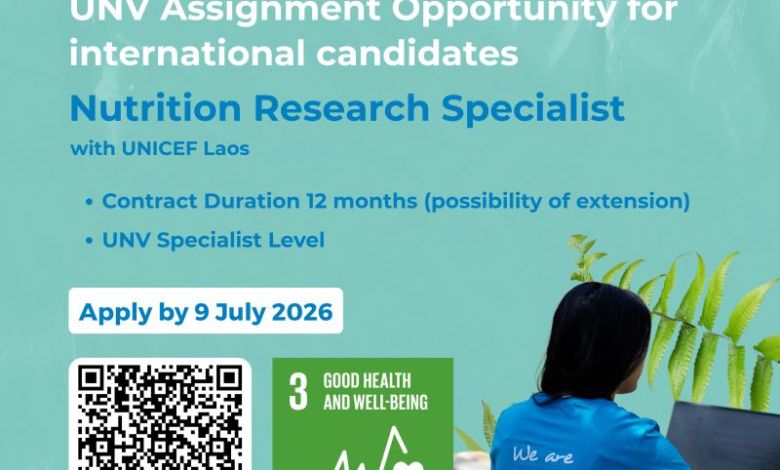
The United Nations Children’s Fund UNICEF is strengthening its nutrition research portfolio in the Lao People’s Democratic Republic through the recruitment of a UN Volunteer Nutrition Research Specialist. The 12-month international assignment, based in Vientiane, is designed to support evidence-driven programming aimed at improving child nutrition outcomes and strengthening food systems.
The role sits within UNICEF Lao PDR’s broader nutrition programme, which is aligned with national priorities and the 2022–2026 Country Programme of Cooperation between the Government of Lao PDR and UNICEF. It also contributes to upcoming strategic planning for 2027–2031, with a strong focus on translating research into scalable interventions.
Strategic Focus on Nutrition Research and Evidence-Based Programming
The Nutrition Research Specialist will play a central role in managing and coordinating multiple operational research initiatives that inform nutrition policy and programming in Lao PDR.
Key research areas include:
- RUTF-Lao effectiveness studies (Ready-to-Use Therapeutic Food interventions)
- Multiple Micronutrient Supplementation (MMS) rollout evaluations
- “Bowl & Spoon” complementary feeding pilots using local recipes
- Moderate Acute Malnutrition (MAM) treatment trials using food-based solutions
These initiatives are designed to generate evidence on how locally adapted nutrition interventions can improve child health outcomes in resource-constrained settings.
Core Responsibilities: Research Coordination and Field Implementation
The assignment places strong emphasis on research leadership, coordination, and technical oversight across multiple partners and field sites.
The specialist will be responsible for:
- Coordinating research implementation across partners, including the Institut de Recherche pour le Développement (IRD), civil society organizations, and government counterparts
- Ensuring adherence to research protocols, timelines, and data quality standards
- Conducting field monitoring visits to supervise ongoing studies
- Managing data validation, cleaning, and interpretation processes
- Facilitating technical meetings and multi-stakeholder coordination sessions
- Contributing to research outputs including reports, briefs, and publications
This role requires strong analytical and organizational capabilities, particularly in managing complex multi-site research environments.
Programme Development and Nutrition Systems Strengthening
Beyond research coordination, the position contributes directly to nutrition programme development and planning.
Responsibilities include:
- Supporting strategic planning for nutrition-sensitive and nutrition-specific interventions
- Integrating research findings into programme design and implementation frameworks
- Contributing to annual work planning and coordination across UNICEF nutrition activities
- Supporting policy dialogue and technical discussions with government stakeholders
The role ensures that evidence generated through field research is systematically translated into practical, scalable solutions for national nutrition programming.
Implementation of Child Nutrition and Food Systems Initiatives
A significant component of the assignment focuses on implementing child nutrition interventions and strengthening food systems approaches.
The specialist will:
- Lead complementary feeding initiatives, including culturally adapted “Bowl & Spoon” approaches
- Support Moderate Acute Malnutrition treatment pilots using locally sourced food solutions
- Assist in developing training materials, behaviour change communication tools, and technical guidelines
- Oversee capacity-building activities such as workshops and field training sessions
- Support monitoring systems and documentation of best practices
These interventions aim to improve dietary diversity and nutrition outcomes for young children through sustainable, community-based approaches.
Technical Support to Food Systems and Policy Development
The role also extends into broader food systems and public health policy support. The specialist will contribute to initiatives focused on:
- Healthy diets and child nutrition environments
- Development of regulatory frameworks supporting healthier food systems
- Multi-sectoral collaboration with UN agencies and national institutions
- Climate-resilient and sustainable nutrition programming
By linking research with policy engagement, the position supports UNICEF’s efforts to strengthen long-term nutrition systems in Lao PDR.
Required Expertise and Professional Profile
The assignment requires candidates with strong academic and professional backgrounds in nutrition, public health, or related research fields.
Essential qualifications include:
- At least 3 years of relevant professional experience
- A bachelor’s degree in nutrition, public health, or epidemiology-related fields
- Strong experience in nutrition research and operational programme implementation
- Advanced skills in data analysis, reporting, and scientific documentation
- Fluency in English (with basic knowledge of Lao considered an advantage)
Candidates must also demonstrate strong interpersonal skills, cultural sensitivity, and the ability to work effectively in multidisciplinary and multicultural teams.
Living Conditions and Field Context in Lao PDR
The position is based in Vientiane, a relatively stable and family-friendly duty station. Living conditions include access to international-standard housing, schools, and basic services.
However, the assignment also involves field travel where road safety and infrastructure limitations may present challenges. Health services are available locally, though advanced medical care is often accessed in neighbouring Thailand.
Conclusion: Strengthening Nutrition Systems Through Research and Action
This UN Volunteer assignment reflects UNICEF’s broader strategy to integrate research, policy, and implementation in addressing child malnutrition in Southeast Asia. By embedding technical specialists within country programmes, UNICEF aims to accelerate evidence-based decision-making and improve nutrition outcomes at scale.
The opportunity represents a significant role for professionals seeking to contribute directly to global child health, food systems transformation, and development-focused research in an international UN setting.