Local governments play a critical role in shaping the lives, opportunities and experiences of children and young people. Decisions made at city and county levels influence access to education, healthcare, public spaces, safety, social services and other essential resources. However, young people are not always meaningfully involved in the decisions that affect their communities.
Youth councils offer an important opportunity to address this gap by creating structured platforms through which children and young people can express their views, engage with local authorities, contribute ideas and participate in community decision-making.
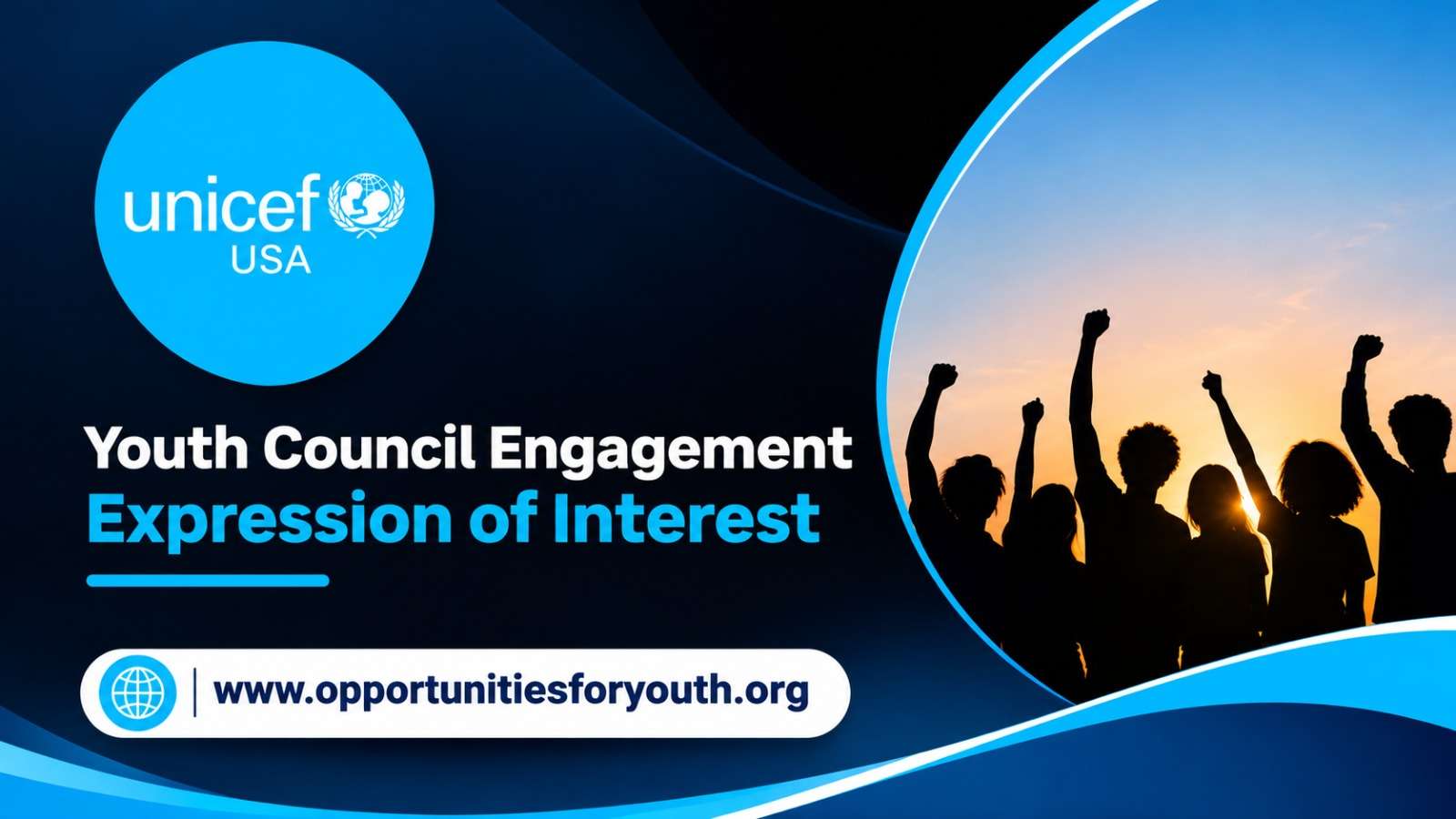
In an effort to strengthen these platforms and support local governments working to place young people’s voices at the centre of governance, UNICEF USA is opening applications for its Youth Council Learning Exchange, a six-month virtual learning opportunity designed specifically for U.S. city and county staff and officials who work with youth councils.
Beginning in January 2027 and running through June 2027, the Learning Exchange will bring together a small group of local government leaders from across the United States. Participants will have an opportunity to share experiences, discuss practical challenges, learn from one another and develop action plans that can strengthen youth council initiatives in their respective communities.
The programme is particularly relevant to local governments that are establishing youth councils, revitalising inactive councils or seeking to improve the effectiveness and influence of existing youth participation structures.
Interest forms are due December 14, 2026. Interested city and county representatives are encouraged to submit the form before the deadline.
The UNICEF USA Youth Council Learning Exchange is a peer-learning initiative intended to strengthen the capacity of local government staff and officials responsible for working with youth councils.
Rather than offering a purely theoretical training programme, the Learning Exchange is designed around the practical experiences and challenges participants encounter in their own communities.
Local government representatives will join a small group of peers from different parts of the United States. Through six monthly virtual sessions, they will have an opportunity to examine real situations, exchange approaches and identify practical ways to improve youth council structures and operations.
The programme recognises that local governments may be at very different stages of youth council development. Some communities may be considering establishing a youth council for the first time, while others may have existing structures that need renewed engagement, stronger participation or more meaningful connections to local decision-making.
The Learning Exchange welcomes these different experiences and provides an opportunity for participants to learn across those stages.
An important feature of the initiative is its practical orientation. Each participant is expected to bring a real challenge from their local government context, explore it with other participants and work towards an action plan that can be implemented in their city or county.
The experiences and insights gathered throughout the programme will also contribute to the development of a Youth Council Toolkit, scheduled for release in July 2027.
This means that participants will not only benefit from peer learning but will also help inform a resource intended to support broader youth council development.
Key Details of the UNICEF USA Youth Council Learning Exchange 2027
The following are the main details provided in the programme announcement:
| Programme detail | Information |
|---|---|
| Programme name | UNICEF USA Youth Council Learning Exchange |
| Organiser | UNICEF USA |
| Opportunity type | Peer-learning and capacity-building initiative |
| Intended participants | U.S. city and county staff and officials working with youth councils |
| Programme start | January 2027 |
| Programme end | June 2027 |
| Duration | Six months |
| Learning format | Monthly virtual sessions |
| Participation structure | Small group of local government leaders from across the United States |
| Main focus | Strengthening youth councils and youth participation in local governance |
| Expected participant output | A practical action plan |
| Additional outcome | Participant experiences will help shape the Youth Council Toolkit |
| Toolkit release | July 2027 |
| Interest form deadline | December 14, 2026 |
| Application process | Submission of a short interest form, followed by communication from the organisers |
Who Should Participate in the Learning Exchange?
The opportunity is intended for professionals and officials working within U.S. city and county governments who have responsibilities connected to youth councils.
It is particularly relevant to people who are directly involved in establishing, managing, supporting, coordinating or strengthening youth participation structures at the local government level.
Potentially relevant roles may include:
- City and county government officials responsible for youth engagement.
- Local government staff coordinating youth councils or youth advisory bodies.
- Officers working in departments responsible for children, young people or community development.
- Local government representatives supporting youth participation in public decision-making.
- Staff members responsible for developing or implementing youth engagement strategies.
- Officials seeking to establish, restart or improve youth councils in their communities.
The announcement specifically identifies city and county staff and officials who work with youth councils as the intended audience. It does not provide a detailed list of eligible job titles or professional qualifications.
Applicants should therefore consider whether their current responsibilities involve youth councils or local government efforts to strengthen young people’s participation in decision-making.
Youth Councils at Different Stages of Development Are Welcome
One of the most inclusive aspects of the UNICEF USA Learning Exchange is that local governments do not need to have fully established or highly developed youth councils to participate.
The programme recognises that communities have different institutional capacities, experiences and levels of progress. It therefore welcomes representatives working with youth councils at different stages.
1. Local governments starting youth councils from scratch
Some cities and counties may not yet have an established youth council but may be interested in creating one.
For these local governments, the Learning Exchange could provide an opportunity to discuss the foundations of youth council development, including how to approach youth engagement, build institutional support and create meaningful opportunities for young people to participate in local governance.
Participants in this category may benefit from learning how other local governments approach youth representation, organise engagement structures and connect young people’s contributions to public decision-making.
2. Local governments restarting inactive youth councils
Some communities may have established youth councils in the past, but their activities may have slowed down or stopped altogether.
An inactive youth council can result from different challenges, including changes in leadership, limited institutional support, difficulties maintaining youth participation or a lack of clear objectives.
The Learning Exchange provides a peer-learning environment in which local government representatives can discuss such challenges and explore ways to restore engagement.
Participants can bring their experiences to the group, learn from communities that have navigated similar situations and develop practical action plans for revitalising their youth councils.
3. Local governments strengthening existing youth councils
The programme is also suitable for local governments that already operate active youth councils.
Even established youth councils may face questions about how to improve participation, increase their influence, strengthen their relationship with local authorities or ensure that young people’s contributions are reflected in decisions.
Representatives from these communities can use the Learning Exchange to exchange successful approaches, identify areas for improvement and explore how to take their existing youth participation structures further.
This broad approach makes the programme relevant to local governments regardless of whether they are at the beginning of their youth council journey or looking to strengthen an established initiative.
What Will Participants Do During the Six-Month Programme?
The Learning Exchange will run for six months, from January through June 2027, through monthly virtual sessions.
Although the announcement does not provide a detailed session-by-session curriculum, it outlines a practical learning process built around real challenges, peer exchange and action planning.
Participants can expect the following broad elements.
1. Bring a real youth council challenge
Each participant is expected to bring a practical challenge from their city or county.
This could involve difficulties establishing a youth council, maintaining participation, strengthening its relationship with local government or ensuring that young people’s views influence decisions.
The emphasis is on real experiences rather than hypothetical discussions.
2. Learn alongside local government peers
Participants will be part of a small group of local government leaders from across the United States.
This structure creates an opportunity to learn from people working in different communities and facing similar questions.
Peer learning can be particularly valuable because local government representatives often understand the practical realities of working within public institutions, including administrative processes, available resources, stakeholder relationships and community expectations.
By sharing experiences, participants can discover approaches that may be adaptable to their own local government settings.
3. Explore practical solutions
The programme is designed to help participants work through their challenges with the support of peers.
Rather than simply identifying problems, participants will have an opportunity to examine possible responses and consider what may be practical within their local government context.
This approach encourages collaborative problem-solving and allows participants to benefit from the experiences of other communities.
4. Develop an actionable plan
A central outcome of the Learning Exchange is an action plan that participants can use in their respective cities or counties.
This is an important distinction between general knowledge-sharing and practical capacity-building.
The goal is for participants to leave the programme with a clearer direction on how to address their identified youth council challenges and strengthen youth participation locally.
The exact format and assessment of the action plans have not been specified in the announcement.
The Youth Council Toolkit: Contributing to a Resource for Local Governments
An additional outcome of the Learning Exchange is the development of the Youth Council Toolkit, which UNICEF USA plans to release in July 2027.
Participants’ experiences throughout the six-month programme will help shape this resource.
The toolkit is expected to benefit from the practical knowledge, challenges and lessons shared by local government representatives working with youth councils.
This creates an opportunity for participants to contribute beyond their own cities and counties. Their experiences can help inform a resource that may support other local governments seeking to establish, restart or strengthen youth councils.
The announcement does not yet provide the toolkit’s final contents or publication format. However, its planned development demonstrates the intention to translate the Learning Exchange’s peer discussions into a resource with broader value.
Why Youth Councils Matter in Local Governance
Youth councils can play an important role in creating more inclusive and responsive local government systems.
Children and young people experience local policies and services directly, yet their perspectives may not always be adequately represented in public discussions.
A well-supported youth council can help bridge this gap by creating a structured channel for young people to communicate their experiences, concerns, priorities and recommendations to local authorities.
Some of the potential contributions of effective youth councils include:
1. Strengthening youth participation
Youth councils can provide young people with opportunities to contribute to discussions about issues affecting their communities. This encourages participation beyond occasional consultations and can help build more consistent relationships between young people and local government institutions.
2. Supporting child-centred decision-making
When local authorities actively listen to children and young people, they gain additional perspectives that can inform policies, programmes and public services.
This can contribute to decisions that are more responsive to the needs and experiences of younger residents.
3. Developing leadership and civic engagement
Participation in youth councils can help young people develop communication, collaboration, problem-solving and leadership skills. It can also strengthen their understanding of local government processes and civic responsibilities.
4. Building stronger relationships between communities and government
Youth councils can create opportunities for constructive engagement between young people and public officials. These relationships may help local governments better understand the concerns of younger community members.
5. Encouraging accountability and responsiveness
When young people have recognised channels through which to raise concerns and offer recommendations, local authorities have additional opportunities to understand how their decisions affect children and youth.
However, youth councils are most effective when participation is meaningful. Young people need opportunities to contribute, receive feedback and understand how their views are considered. Establishing a council alone does not automatically guarantee meaningful influence.
Benefits of Participating in the UNICEF USA Learning Exchange
Although the announcement does not specify financial awards, grants or participant stipends, it identifies several practical benefits associated with the programme.
Peer learning with local government leaders
Participants will connect with a small group of local government leaders from across the United States.
This creates an opportunity to exchange knowledge, compare experiences and learn from communities facing similar youth council challenges.
Practical problem-solving
Participants will work on real challenges from their local government contexts rather than limiting discussions to general concepts.
This makes the programme relevant to the everyday responsibilities of local government staff and officials.
Development of an action plan
Participants will work towards an action plan that they can use in their own city or county.
This provides a practical outcome that can help guide subsequent youth council development or improvement efforts.
Contribution to the Youth Council Toolkit
Participants’ experiences will help shape the Youth Council Toolkit scheduled for release in July 2027.
Their contributions may therefore help inform a resource intended to support youth councils beyond the participating communities.
Connection to wider UNICEF USA youth engagement efforts
Submitting the interest form also connects a city or county to other ways UNICEF USA is working to put children’s voices at the centre of local decisions.
This may provide an avenue for local governments to learn about further opportunities for engagement with UNICEF USA. The announcement does not, however, specify particular additional programmes or guarantee participation in them.
How to Express Interest in the UNICEF USA Youth Council Learning Exchange
Interested city and county representatives should complete the short interest form provided by UNICEF USA.
The announcement indicates that the form is brief and that the organisers will follow up after submission.
The process can be approached through the following steps:
- Confirm your local government role: Ensure that you are a staff member or official working within a U.S. city or county government and that your responsibilities relate to youth councils.
- Consider your youth council’s current stage: Identify whether your local government is starting a youth council, restarting an inactive one or strengthening an existing structure.
- Identify a practical challenge: Think about an issue affecting your local youth council that could benefit from discussion and collaborative problem-solving.
- Complete the interest form: Submit the short form through the official UNICEF USA application or interest-form link.
- Wait for follow-up communication: UNICEF USA indicates that it will contact interested representatives after receiving their forms.
The announcement does not provide a detailed application link in the shared information. Interested applicants should therefore obtain the official interest form through the original UNICEF USA announcement or the organisation’s official communication channels.
Application Deadline
The deadline for submitting interest forms is December 14, 2026.
Interested city and county representatives should complete the form before this date.
Space in the Learning Exchange is limited, and submission of an interest form should not automatically be interpreted as confirmation of selection or participation.
Important Information Applicants Should Know
Before submitting an interest form, prospective participants should take note of the following:
- The opportunity is specifically intended for U.S. city and county staff and officials working with youth councils.
- Youth councils at different stages of development are welcome, including those being established, restarted or strengthened.
- The programme will run from January through June 2027.
- There will be six monthly virtual sessions.
- Participants will work with a small group of local government leaders from across the United States.
- Each participant is expected to bring a real challenge and work towards an actionable plan.
- Participant experiences will help shape the Youth Council Toolkit scheduled for release in July 2027.
- Interest forms must be submitted by December 14, 2026.
- The announcement does not specify a participation fee, stipend, travel allowance, formal academic qualifications or a detailed selection process.
- Submission of an interest form does not guarantee selection.
Applicants should rely on the official UNICEF USA communication for any additional requirements or instructions provided during the follow-up process.
Frequently Asked Questions
1. What is the UNICEF USA Youth Council Learning Exchange?
It is a six-month virtual peer-learning initiative designed for U.S. city and county staff and officials who work with youth councils. It aims to help local government representatives address practical challenges and strengthen youth participation in local decision-making.
2. Who can apply?
The opportunity is intended for staff and officials working in U.S. city and county governments who are involved in youth councils.
3. Can a local government apply if it has not established a youth council?
Yes. The announcement explicitly welcomes local governments starting youth councils from scratch.
4. Can representatives from communities with inactive youth councils participate?
Yes. Local governments seeking to restart youth councils that have become inactive are welcome.
5. Are established youth councils eligible?
Yes. Local governments with active youth councils that want to strengthen or improve their existing structures are also encouraged to express interest.
6. How long will the programme run?
The Learning Exchange will run for six months, from January through June 2027.
7. Will the sessions be held online?
Yes. The programme will consist of six monthly virtual sessions.
8. What will participants gain from the programme?
Participants will have opportunities to learn from peers, discuss real youth council challenges, explore practical solutions and develop an action plan for their local government.
Their experiences will also help shape the Youth Council Toolkit planned for release in July 2027.
9. Is there a participation fee or financial award?
The shared announcement does not specify a participation fee, stipend, grant or other financial award. Interested representatives should seek clarification from UNICEF USA if this information is important to their participation.
10. What is the application deadline?
The deadline for submitting interest forms is December 14, 2026.
11. Does submitting an interest form guarantee selection?
No such guarantee is stated in the announcement. UNICEF USA indicates that it will follow up with interested representatives, and participation is limited by available space.
12. Where can interested representatives find the application form?
The original announcement refers to an interest form but does not include its direct URL in the information shared here. Applicants should access the form through the original UNICEF USA announcement or its official communication channels.
Conclusion
The UNICEF USA Youth Council Learning Exchange 2027 offers an opportunity for U.S. city and county governments to strengthen the way children and young people participate in local decision-making.
By bringing together local government representatives for six months of virtual peer learning, the initiative recognises that effective youth councils require more than simply creating a formal structure. They need consistent support, meaningful engagement, practical solutions and a clear connection to the decisions that shape young people’s lives.
Whether a local government is establishing its first youth council, trying to revive an inactive structure or seeking to strengthen an established initiative, the Learning Exchange provides an opportunity to learn from peers and develop practical plans for progress.
The additional contribution to the Youth Council Toolkit also gives participants an opportunity to share lessons that may benefit other communities.
Eligible city and county staff and officials working with youth councils are encouraged to express their interest before December 14, 2026.
Meaningful youth participation begins when institutions create space for young people to be heard and take their contributions seriously. This Learning Exchange is an opportunity for local governments to strengthen that commitment and place children’s voices closer to the centre of public decision-making.