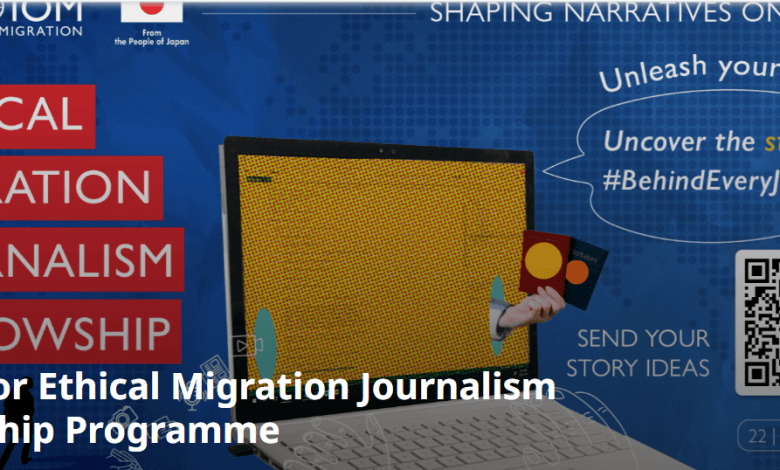
Journalists and students based in Chiang Rai, Thailand, have an opportunity to strengthen their reporting skills and produce original migration stories through the Ethical Migration Journalism Fellowship Programme 2026.
The fellowship is being offered by the International Organization for Migration (IOM) in partnership with the Ministry of Foreign Affairs. It is designed to promote accurate, balanced, ethical and conflict-sensitive reporting on migration while supporting local journalists and emerging storytellers.
Five fellows will be selected for a three-month programme running from 1 October to 31 December 2026. Each selected fellow will receive a USD 1,000 reporting grant to support the production of an original migration story focusing on Chiang Rai and/or surrounding areas.
The programme combines financial support with mentorship, editorial guidance, technical assistance and opportunities to engage with experienced correspondents and migration experts.
About the Ethical Migration Journalism Fellowship
The fellowship seeks to strengthen the capacity of journalists and emerging storytellers to report on migration using evidence-based and responsible approaches.
Migration can involve complex social, economic, humanitarian and political issues. The programme therefore places emphasis on journalism that is ethical, accurate, balanced and sensitive to potential conflicts.
During the three-month fellowship period, selected participants will develop original stories related to migration in Chiang Rai and nearby areas. Fellows will have access to professional guidance as they research, develop and produce their stories.
The programme provides an opportunity for participants to improve their reporting techniques while contributing to more informed public discussions about migration.
USD 1,000 Reporting Grant
One of the key benefits of the fellowship is the USD 1,000 reporting grant provided to each selected fellow.
The grant is intended to support the production of an original migration story. This financial assistance can help fellows undertake reporting activities and develop evidence-based journalism during the fellowship period.
In addition to the grant, participants will receive professional support throughout the reporting process.
The combination of funding and mentorship allows fellows to concentrate on developing a well-researched story while receiving guidance from professionals familiar with migration reporting.
Mentorship and Editorial Guidance
Selected fellows will receive mentorship and editorial guidance throughout their reporting projects.
This support can help participants develop their story ideas, strengthen research approaches, conduct interviews responsibly and refine their final work.
Fellows will also receive technical support from IOM experts and partners. This provides participants with access to additional expertise that can assist them when researching migration-related issues.
For emerging journalists and students, the mentorship component can provide valuable exposure to professional reporting practices.
Skills Development in Migration Journalism
The programme places particular emphasis on responsible reporting.
Fellows will have opportunities to develop skills in areas including:
- Ethical interviewing.
- Responsible migration journalism.
- Conflict-sensitive reporting.
- Evidence-based storytelling.
- Migration-related research.
- Professional story development.
- Responsible engagement with sources and communities.
These skills can be useful beyond the fellowship itself, particularly for participants interested in journalism, communications, migration reporting or humanitarian storytelling.
Opportunities to Connect With Foreign Correspondents
Participants will also have opportunities to exchange knowledge with foreign correspondents.
This aspect of the fellowship can expose emerging storytellers to different approaches to international and migration journalism. It may also provide opportunities for participants to discuss reporting challenges, research methods and approaches to telling complex stories.
Professional exchanges can help fellows gain a broader understanding of how migration issues are covered for different audiences.
Publication Opportunities
Another potential benefit is the opportunity for completed stories to be published through IOM platforms.
Publication can give fellows additional exposure for their work and provide a professional portfolio piece demonstrating experience in migration journalism.
However, participants should follow the programme’s editorial and submission requirements and should not assume that every completed story will necessarily be published.
Who Can Apply?
The Ethical Migration Journalism Fellowship Programme is open to journalists and students based in Chiang Rai, Thailand, regardless of nationality.
This makes the programme relevant to both established local journalists and emerging storytellers who are developing their reporting experience.
Potential applicants should consider whether they have an interest in migration issues and whether they can commit to the fellowship timeline.
Because the programme focuses on Chiang Rai and surrounding areas, applicants should also be prepared to develop a story connected to migration in the relevant geographic area.
Fellowship Timeline
Applicants should take note of the programme’s key dates.
The application process opens on 1 September 2026, while the deadline for applications is 22 September 2026.
The selection process is scheduled as follows:
- Application opens: 1 September 2026
- Application deadline: 22 September 2026
- Shortlisting and interviews: 23–25 September 2026
- Selection announcement: 29 September 2026
- Fellowship period: 1 October–31 December 2026
- Final story submission: 8 January 2027
Applicants should prepare their materials early to ensure that submissions are completed before the deadline.
How the Fellowship Can Support Emerging Storytellers
For journalism students and early-career reporters, producing a substantial migration story can provide practical experience that complements academic learning.
The fellowship offers a structured environment in which participants can develop a story from research through reporting and final submission. Access to mentors and technical experts can further support participants as they navigate complex migration-related topics.
The reporting grant also gives selected fellows financial resources to help undertake their projects.
How to Apply
Interested journalists and students should review the official fellowship application information and ensure that they meet the programme’s eligibility requirements.
Applicants should prepare their application according to the instructions provided by IOM and its partners. They should also ensure that their proposed interests align with the fellowship’s focus on ethical and evidence-based migration reporting in Chiang Rai and surrounding areas.
Applications must be submitted by 22 September 2026.
Final Thoughts
The IOM Ethical Migration Journalism Fellowship Programme 2026 provides five selected journalists and students with an opportunity to develop original migration stories while receiving a USD 1,000 reporting grant, mentorship, editorial guidance and technical support.
The three-month programme will focus on Chiang Rai and surrounding areas and will emphasize ethical interviewing, responsible migration journalism and conflict-sensitive reporting.
With applications closing on 22 September 2026, eligible journalists and students based in Chiang Rai should review the application requirements and prepare their submissions ahead of the deadline.