Are you a female master’s or PhD student in Africa looking for research funding to advance your academic career while making a real difference in environmental protection? This research grant opportunity could be the breakthrough you have been waiting for!
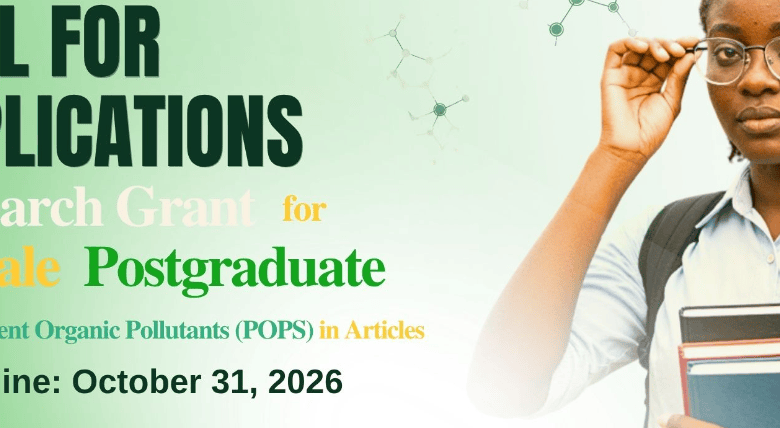
The Research Grant Program supporting female postgraduate students in Africa is offering an opportunity for eligible women pursuing master’s and doctoral degrees in five African countries to conduct research focused on the environmentally sound management of hazardous chemicals in plastics and other articles.
The initiative aims to support women researchers whose work can contribute to safer chemical management, environmental sustainability, pollution prevention, and the protection of human health. For postgraduate students passionate about science, environmental policy, public health, and sustainable development, this opportunity offers a chance to turn academic research into practical solutions for communities and the environment.
If you are researching plastic pollution, hazardous chemicals, waste management, environmental health, or sustainable materials, read on to learn what this research grant involves, who may benefit, and how to prepare a competitive application.
Research Grant Program for African Women: What Is the Opportunity About?
The Research Grant Program is designed to support female master’s and PhD students undertaking research that advances the environmentally sound management of hazardous chemicals found in plastics and other articles.
Plastic products are widely used in everyday life, from food packaging and household goods to electronics, construction materials, and consumer products. However, certain chemicals used in the manufacture of plastics and other articles can pose risks to human health and the environment when they are improperly managed, released, recycled, or disposed of.
Research plays an essential role in identifying these risks and developing effective solutions. By supporting women pursuing postgraduate studies, the grant program seeks to strengthen research capacity and encourage evidence-based approaches to chemical safety and environmental protection.
Successful applicants may have the opportunity to develop research that contributes to better environmental practices, improved chemical management, and more informed decision-making.
Important: The official announcement should be consulted to confirm the five eligible African countries, funding amounts, application deadline, eligible research expenses, and application procedure.
Who Can Apply for the Research Grant?
This opportunity is intended for female master’s and PhD students in five African countries who are conducting research related to the environmentally sound management of hazardous chemicals in plastics and other articles.
Although the final eligibility requirements must be confirmed in the official call for applications, prospective applicants should consider whether their academic background and research interests align with the program’s environmental objectives.
The opportunity may be particularly relevant to students studying:
- Environmental science and environmental management.
- Chemistry, toxicology, and chemical safety.
- Public health and environmental health.
- Plastic pollution and waste management.
- Materials science and sustainable product development.
- Environmental engineering and pollution control.
- Environmental law, policy, and governance.
- Circular economy strategies and sustainable development.
Students whose research investigates hazardous substances in plastic products, chemical exposure, recycling practices, or safer alternatives to harmful chemicals may find the program especially relevant.
Applicants should verify whether they must already be enrolled in a master’s or PhD program, be citizens or residents of one of the eligible countries, or meet additional academic and research requirements.
Why This Research Grant Matters for African Women
Across Africa, environmental challenges such as plastic pollution, inadequate waste disposal systems, and the unsafe handling of hazardous substances create important research and policy questions.
Women researchers can contribute valuable scientific evidence, innovative technologies, and community-centred solutions to these challenges. Yet postgraduate research often requires resources for laboratory testing, fieldwork, data collection, equipment, travel, and other research activities.
Research grants can help eligible students address some of these barriers and focus on producing meaningful academic work.
For female postgraduate researchers, this opportunity could support more than the completion of a dissertation or thesis. It could also help strengthen research experience, build professional networks, and create pathways into environmental consultancy, academia, public policy, international development, and sustainability-focused careers.
For communities, the potential benefits include improved knowledge about chemical hazards, better waste management practices, and evidence that can inform environmental protection policies.
The program’s specific financial support and additional benefits should be checked in the official application guidelines before applying.
What Types of Research Could Be Relevant?
The program focuses on environmentally sound management of hazardous chemicals in plastics and other articles. Applicants should therefore ensure that their proposed projects have a clear connection to this subject.
Potential research areas could include:
1. Hazardous chemicals in plastic products
Investigating the presence, use, or potential release of hazardous chemicals in selected plastic products and consumer articles.
2. Plastic recycling and chemical safety
Examining how recycling, reuse, and waste processing practices may affect the management of hazardous substances in plastic materials.
3. Environmental and human health risks
Assessing potential exposure pathways involving hazardous chemicals and identifying opportunities to reduce risks to people and ecosystems.
4. Safer alternatives to hazardous substances
Exploring safer chemicals, alternative materials, and improved product design approaches that could reduce environmental and health concerns.
5. Chemical waste management and environmental policy
Evaluating waste management systems, regulatory approaches, and practical strategies for improving the safe handling and disposal of hazardous chemicals.
These are illustrative research themes, not a confirmed list of funded topics. Applicants should match their proposals to the precise priorities and exclusions stated in the official call.
How to Prepare a Strong Application
Competition for research funding can be challenging, so prospective applicants should begin preparing early and carefully review the official application requirements.
Here are some practical steps to consider before submitting an application.
1. Develop a focused research question. Clearly explain the environmental or chemical safety problem your research intends to address. A focused question can help demonstrate the relevance and feasibility of your project.
2. Explain the importance of your research. Describe how your proposed work could contribute to safer chemical management, environmental protection, or improved understanding of hazardous substances in plastics and other articles.
3. Prepare a clear research proposal. Outline your objectives, methodology, expected outcomes, timeline, and how you intend to communicate your findings. Ensure the proposed activities are realistic and consistent with the grant’s requirements.
4. Demonstrate the potential impact. Explain how your findings could support researchers, policymakers, industry stakeholders, local communities, or environmental organisations.
5. Check all eligibility requirements. Confirm that your country, postgraduate status, research topic, and proposed expenses meet the program’s conditions. Prepare academic records, supporting documents, and any required institutional approvals.
6. Submit before the deadline. Follow the official instructions carefully and ensure that all required documents are complete. Do not assume that late or incomplete applications will be accepted.
Why You Should Not Miss This Opportunity
For female postgraduate students in Africa, research funding can be an important step towards building a career in science, environmental sustainability, and public policy.
This research grant opportunity brings attention to an issue of growing importance: how hazardous chemicals in plastics and other articles can be managed more safely to protect human health and the environment.
By supporting relevant research, the initiative has the potential to help strengthen African research capacity and encourage practical solutions to environmental challenges.
Whether you are pursuing a master’s degree or a PhD, consider whether your research interests align with the program’s objectives. A well-designed project could help generate evidence that contributes to safer products, improved waste management, and more sustainable environmental practices.
However, prospective applicants should remember that the exact funding amount, application deadline, eligible countries, and award conditions must be verified through the official announcement.
How to Apply for the Research Grant
Interested female master’s and PhD students should consult the official Research Grant Program announcement for full eligibility criteria, application instructions, required documents, and submission details.
Before applying, confirm the following:
- Whether your country is among the five eligible African countries.
- Whether your master’s or PhD research meets the program’s thematic priorities.
- What financial support is available and which expenses are eligible.
- The application deadline and submission method.
- Whether recommendation letters, supervisor approval, or institutional endorsements are required.
For more information: Refer to the official program announcement or contact the grant administrator using the details provided in the original call for applications. As the official application link and deadline have not been provided here, they should be confirmed before publishing this article as an active funding opportunity.
VISIT HERE TO APPLY
Final Thoughts
The Research Grant Program represents a potentially valuable opportunity for female postgraduate researchers seeking to contribute to environmental sustainability in Africa. By focusing on the environmentally sound management of hazardous chemicals in plastics and other articles, the initiative highlights the importance of research in addressing chemical pollution and supporting safer, more sustainable communities.
If you are a female master’s or PhD student in one of the eligible countries, review the official announcement, assess your eligibility, and prepare a research proposal that demonstrates scientific merit and environmental relevance.
Your research could help shape a safer and more sustainable future for Africa.