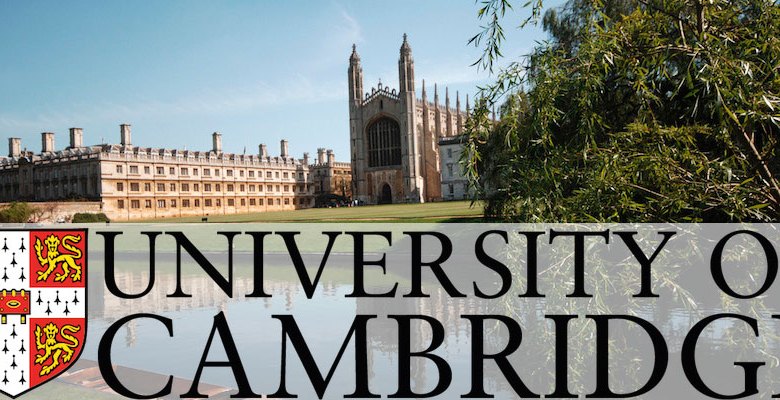
The University of Cambridge’s Yusuf Hamied Department of Chemistry is inviting applications for two fully funded PhD studentships under the supervision of Professor Erwin Reisner. The opportunities are open to exceptional candidates worldwide interested in developing innovative solutions in microbiology, biotechnology, chemical engineering, renewable energy, and sustainable chemistry.
The available positions include:
- PhD Studentship in Microbiology – a four-year funded doctoral programme beginning in October 2027.
- PhD Studentship in Chemical Engineering – a three-and-a-half-year funded doctoral programme beginning in October 2027.
Both projects are hosted within the Reisner Laboratory, which develops interdisciplinary technologies that use solar energy to create sustainable fuels and chemical products for a circular economy.
The application deadline for both opportunities is November 2, 2026.
The University of Cambridge is seeking a highly motivated PhD candidate to join a research project focused on developing biohybrid technologies that combine engineered living cells with solar-powered systems.
The project explores how microorganisms can be engineered to convert carbon dioxide and other chemical feedstocks into valuable complex chemicals using sustainable processes.
Research Focus
The successful PhD researcher will investigate:
- Engineering live cells for sustainable chemical production.
- Developing biological systems capable of producing targeted complex chemicals.
- Integrating microbial systems with light-harvesting semiconductor technologies.
- Creating biohybrid platforms for semi-artificial photosynthesis.
- Advancing solar-driven biological manufacturing approaches.
The project aims to develop innovative systems where semiconductor materials provide the chemical inputs required by engineered cells, enabling the sustainable production of organic chemicals.
Research outcomes are expected to contribute to leading scientific publications and advance the development of next-generation sustainable biotechnology platforms.
Microbiology PhD Eligibility Requirements
Applicants should hold, or expect to obtain, qualifications equivalent to a UK first-class Master’s degree or honours degree in:
- Microbiology.
- Biochemistry.
- A closely related biological or chemical science discipline.
Successful candidates should demonstrate strong interest in:
- Microbial biotechnology.
- Sustainable chemistry.
- Synthetic biology.
- Bioengineering.
- Renewable technology applications.
The programme welcomes researchers who are passionate about interdisciplinary science and developing solutions to global sustainability challenges.
The second opportunity focuses on developing scalable solar-driven chemical technologies for plastic waste conversion.
The PhD researcher will work on photoreforming technology, an emerging process that uses solar energy to transform plastic waste into useful products including hydrogen fuel and valuable organic chemicals.
Research Focus
The project will involve:
- Developing scalable photoreforming processes.
- Designing continuous-flow solar reactors.
- Testing solar chemical technologies under real sunlight conditions.
- Working toward kilogram-scale plastic processing.
- Developing metre-square-scale solar reactor systems.
The research aims to move solar chemical technologies closer to practical deployment by creating efficient systems capable of supporting a circular economy.
The project is supported by the Royal Academy of Engineering Chair in Emerging Technologies programme, which promotes the translation of innovative research into real-world applications.
Chemical Engineering PhD Eligibility Requirements
Applicants should hold, or expect to obtain, qualifications equivalent to a UK first-class Master’s degree or honours degree in:
- Chemical Engineering.
- Process Engineering.
- Environmental Chemistry.
- A closely related discipline.
Candidates should demonstrate interest and experience in areas such as:
- Sustainable chemical processes.
- Renewable energy technologies.
- Materials science.
- Catalysis.
- Environmental engineering.
Research Environment at the Reisner Laboratory
Both PhD students will join the internationally recognized Reisner Laboratory, which brings together researchers from multiple disciplines to develop technologies for sustainable energy and chemical production.
The research group combines expertise in:
- Chemistry.
- Materials science.
- Microbiology.
- Chemical engineering.
- Renewable energy.
- Sustainable technologies.
Students will work alongside experienced scientists and engineers while contributing to research with potential environmental and industrial impact.
Funding and Programme Duration
The available scholarships provide:
Microbiology PhD
- Fully funded studentship.
- Duration: 4 years.
- Start date: October 2027.
- Open to home and international students.
Chemical Engineering PhD
- Fully funded studentship.
- Duration: 3.5 years.
- Start date: October 2027.
- Open to home and international students.
Application Requirements
Applicants must submit the following documents:
- Cover letter explaining motivation and research interests.
- Detailed curriculum vitae (CV).
- Full academic transcripts.
- Formal University of Cambridge postgraduate application.
- Reference letters.
Applications should be submitted through the University of Cambridge postgraduate admissions system after completing the required email submission process.
Application Deadline
Interested candidates must apply before:
Deadline: November 2, 2026
Programme commencement: October 2027
Applicants are encouraged to prepare their materials early to ensure all required documents and references are submitted before the closing date.
Opportunity to Advance Sustainable Science
These PhD opportunities provide talented researchers with the chance to contribute to internationally significant research addressing major global challenges, including climate change, renewable energy, plastic pollution, and sustainable manufacturing.
Through advanced research in microbiology and chemical engineering, successful candidates will help develop technologies that connect biological systems, solar energy, and chemical innovation to support a more sustainable future.