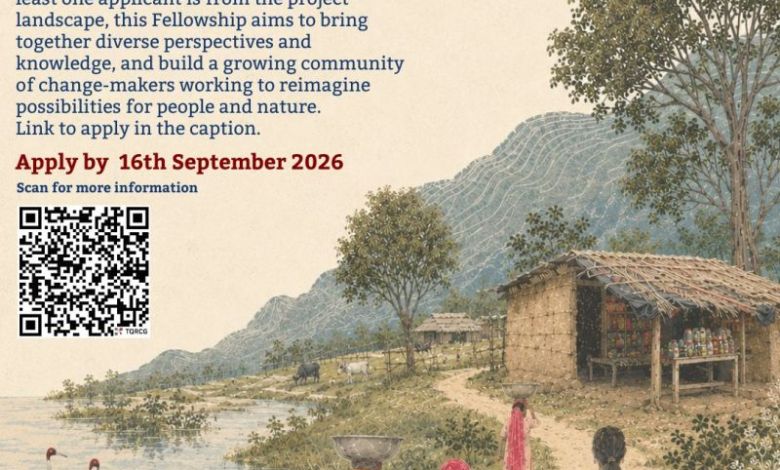
The Coexistence Fellowship 2026 is offering conservation practitioners and community members an opportunity to work together on innovative approaches to human-wildlife coexistence across India.
Designed around community knowledge, collaboration and shared stewardship, the two-year fellowship seeks to develop a new generation of conservation practitioners who can address environmental challenges while recognising the experiences, knowledge and priorities of local communities.
What Is the Coexistence Fellowship?
The Coexistence Fellowship is a transformative conservation programme that brings together pairs of fellows, including local community members, to collaboratively develop culturally grounded and equitable approaches to human-wildlife coexistence.
Rather than treating conservation as a purely technical or scientific challenge, the fellowship places community knowledge and mutual learning at the centre of conservation practice.
The programme aims to encourage a conservation model based on empathy, reciprocity and shared responsibility, helping participants explore practical approaches for communities and wildlife to coexist more effectively.
Candidates are encouraged to apply as a team of two, creating an opportunity for different perspectives and experiences to come together throughout the fellowship.
Two-Year Fellowship with Training and Mentorship
The Coexistence Fellowship runs for two years and combines structured learning, mentorship and field-based conservation work.
Fellows participate in mandatory training modules covering different aspects of conservation and coexistence. These training components are intended to strengthen participants’ understanding of conservation challenges while providing tools that can be applied within their respective communities and landscapes.
Each fellow is also assigned a mentor who provides guidance throughout the fellowship period.
In addition to individual mentorship, the fellowship programme team supports participants throughout their two-year journey, helping fellows navigate their projects, learning and professional development.
A Community-Centred Approach to Conservation
One of the most distinctive aspects of the fellowship is its emphasis on local community participation in conservation.
Human-wildlife conflict and coexistence challenges can differ significantly between landscapes and communities. Local residents often possess valuable knowledge about wildlife behaviour, ecosystems, cultural practices and historical relationships with surrounding environments.
The fellowship therefore seeks to strengthen conservation approaches by bringing community knowledge into decision-making and encouraging practitioners to learn directly from the people who experience conservation challenges on the ground.
This approach can help create conservation practices that are not only environmentally informed but also socially equitable and culturally relevant.
Who Can Benefit From the Fellowship?
The programme is particularly relevant to individuals working or engaging in areas such as:
- Conservation and biodiversity
- Human-wildlife coexistence
- Community-based conservation
- Environmental research
- Wildlife management
- Indigenous and local knowledge
- Community development
- Conservation education
- Environmental policy and practice
The programme’s team-based application model also makes it particularly valuable for applicants who already have a potential community or professional partner with whom they can develop a collaborative conservation initiative.
Supporting a New Generation of Conservation Practitioners
The Coexistence Fellowship seeks to go beyond individual professional development by building a broader movement of conservation practitioners committed to empathy, reciprocity and shared stewardship.
Through training, mentorship and collaborative learning, fellows have the opportunity to develop practical knowledge while engaging with experts and peers working across different conservation landscapes.
The programme also provides an opportunity for participants to become part of a growing fellowship alumni network. Previous cohorts include fellows working across different landscapes and conservation contexts in India.
Fellowship Partners and Host Institution
The Coexistence Fellowship is supported by the British Asian Trust, Elephant Family and Rainmatter Foundation and is conducted at the University of Trans-Disciplinary Health Sciences and Technology (TDU).
The programme brings together expertise from conservation researchers, practitioners, academics and mentors, creating a multidisciplinary environment for fellows to develop their work.
Coexistence Fellowship 2026 Applications
The programme website currently features an “Apply now for the 2026 cohort” option for prospective fellows.
Interested applicants should review the official fellowship information and application requirements before submitting their applications. Candidates are encouraged to consider applying as a team of two, particularly where the proposed collaboration can bring together community and conservation perspectives.
Why the Coexistence Fellowship Stands Out
The fellowship offers more than conventional conservation training. Its central premise is that effective human-wildlife coexistence requires collaboration between conservation practitioners and communities.
For individuals passionate about biodiversity, community engagement and sustainable conservation, the programme provides an opportunity to gain structured training, work with mentors, exchange knowledge with peers and contribute to conservation approaches grounded in local realities.
The 2026 Coexistence Fellowship could therefore be a valuable opportunity for emerging and experienced conservation practitioners seeking to help shape a more inclusive and community-centred future for wildlife conservation in India.