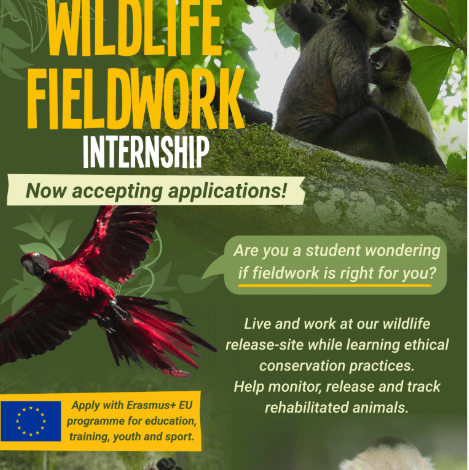
Wildlife conservation enthusiasts, aspiring biologists and students interested in animal rehabilitation have an opportunity to gain practical field experience at a wildlife release site through an opportunity promoted in connection with the Erasmus+ Programme of the European Union.
The placement focuses on working directly with rehabilitated and critically endangered animals as they prepare for their return to the wild. Participants can gain exposure to wildlife monitoring, animal behaviour data collection, environmental enrichment and ethical conservation practices while working alongside experienced professionals.
Interested candidates can explore the opportunity through the official website of Rescate Wildlife. Applicants should confirm the placement’s eligibility requirements, funding arrangements and application process before submitting an application.
About the Wildlife Conservation Opportunity
Wildlife rehabilitation and release programmes play an important role in conservation by helping animals recover and, where appropriate, prepare to survive in their natural habitats. These activities can involve monitoring animal behaviour, providing suitable enrichment, supporting feeding and foraging activities, and assessing an animal’s readiness for release.
At the wildlife release site, participants will have the opportunity to learn about these processes through practical involvement in conservation activities. The experience is intended for people interested in developing field skills and gaining a better understanding of the responsibilities involved in wildlife care and rehabilitation.
The opportunity may be particularly relevant to students and early-career professionals exploring careers in biology, zoology, wildlife management, ecology and environmental conservation.
What Will Participants Do?
The placement involves a range of practical activities connected to wildlife rehabilitation and release preparation.
1. Live and work at a wildlife release site
Participants will live and work at the wildlife release site, gaining exposure to the practical demands of conservation work. This setting may provide opportunities to observe how wildlife rehabilitation teams manage daily activities and prepare animals for potential release.
Applicants should confirm the accommodation arrangements, placement duration, living costs and any associated participation fees directly with the organisation.
2. Learn ethical wildlife conservation practices
Participants will learn about ethical approaches to wildlife conservation and the importance of responsible animal care. Working alongside experienced professionals can help them understand why wildlife handling, monitoring and rehabilitation activities must be conducted with attention to animal welfare and conservation standards.
3. Support wildlife monitoring, release and tracking
The opportunity includes activities related to monitoring, releasing and tracking rehabilitated and critically endangered animals. These tasks can contribute to understanding animal behaviour, adaptation and progress as animals prepare for life in the wild.
The specific responsibilities assigned to participants will depend on the organisation’s protocols, the species involved and the participants’ experience and training.
4. Collect animal behaviour data
Participants will collect behavioural data, supporting efforts to observe and understand how animals respond to their surroundings. Behavioural observations can help conservation teams assess animal activity and inform decisions about rehabilitation and release preparation.
This experience may also help participants develop practical research skills relevant to wildlife biology, ecology and conservation science.
5. Design enrichment activities and forage natural foods
The placement also involves designing enrichment activities and foraging for natural foods for animals in pre-release care. Enrichment can encourage natural behaviours and provide animals with opportunities to interact with their environment before returning to the wild.
These activities offer practical insight into the relationship between animal welfare, rehabilitation and successful conservation outcomes.
Who Should Apply?
The opportunity is presented as suitable for a broad range of people interested in wildlife and conservation, including:
- Students interested in biology, zoology, ecology or environmental science.
- Aspiring biologists and wildlife conservation professionals.
- Individuals interested in animal rehabilitation and endangered species protection.
- Conservation enthusiasts seeking practical field experience.
- People hoping to develop skills in wildlife monitoring, behavioural observation and conservation activities.
The announcement does not specify mandatory academic qualifications, a minimum age, required previous experience or country-specific eligibility conditions. Prospective applicants should consult the organisation directly to determine whether they meet the requirements.
Is the Opportunity Funded by Erasmus+?
The opportunity is being promoted with reference to Erasmus+, the European Union programme supporting education, training, youth and sport. However, the information provided does not establish whether this particular wildlife placement receives Erasmus+ funding, which participants may qualify for support or what expenses would be covered.
Applicants should therefore verify whether funding is available for the specific placement and whether it covers travel, accommodation, meals, insurance or other costs. They should also establish whether participation requires a fee or an arrangement through an eligible sending organisation.
It is important not to assume that all costs are covered simply because an opportunity is advertised alongside Erasmus+.
How to Apply
Individuals interested in the wildlife conservation placement should visit the organisation’s website to obtain further information about the programme and its application process.
Before applying, candidates should confirm the application procedure, eligibility criteria, placement dates, duration, accommodation arrangements, costs and any available financial support. Applicants should also ask whether previous wildlife experience or relevant academic qualifications are required.
A strong application should accurately explain the candidate’s interest in wildlife conservation, relevant studies or experience, and willingness to participate in practical conservation activities.
Why Consider a Wildlife Conservation Placement?
Practical conservation experience can help participants connect scientific knowledge with the day-to-day work of protecting wildlife. Exposure to animal monitoring, behavioural observation, enrichment and release preparation may also help aspiring conservation professionals understand the challenges involved in rehabilitating animals and supporting their return to natural habitats.
For students and individuals exploring careers in wildlife management, biology or environmental conservation, this type of placement may offer valuable learning opportunities. However, candidates should carefully review the official terms and verify all funding and participation details before making commitments.