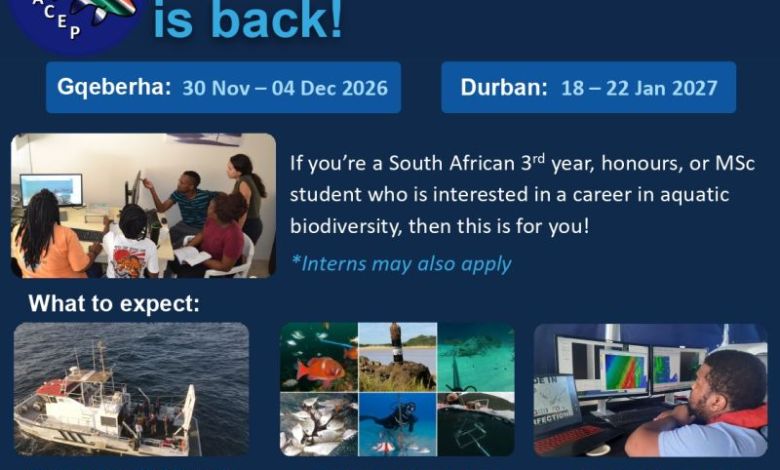
South African students interested in building a career in aquatic biodiversity research are invited to apply for an exciting Summer School offering practical fieldwork, technical training, and hands-on learning experiences.
The programme will be held in two locations and sessions: Gqeberha from 30 November to 4 December 2026 and Durban from 18 to 22 January 2027. It is designed for South African students currently in their third year of undergraduate study, honours, or MSc programmes who are interested in pursuing careers connected to aquatic biodiversity. Interns are also eligible to apply.
Participants will have the opportunity to gain exposure to sea-going fieldwork, practical research activities, advanced technical methods, and applied learning in aquatic biodiversity research. The programme will include experience on research vessels and introduce participants to important scientific approaches and technologies used in marine and aquatic research.
Applications close on 18 September 2026.
An Opportunity for Future Aquatic Biodiversity Researchers
Aquatic ecosystems are essential to biodiversity, livelihoods, food systems, climate resilience, and environmental sustainability. Understanding these ecosystems requires researchers with strong scientific knowledge as well as practical experience in fieldwork, data collection, monitoring, and emerging research technologies.
This Summer School has been developed to provide aspiring researchers with practical exposure to the field of aquatic biodiversity. Rather than focusing exclusively on classroom-based learning, participants will engage with applied research methods and gain insights into the realities of conducting scientific work in aquatic environments.
The opportunity may be particularly valuable for students considering future careers in:
- Aquatic biodiversity research
- Marine science
- Fisheries science
- Ecology
- Environmental science
- Conservation biology
- Biodiversity management
- Ocean and coastal research
- Aquatic resource management
- Environmental monitoring
By participating in field-based and technical learning activities, students can gain experience that may help them better understand potential research and career pathways.
Who Can Apply?
The Summer School is specifically aimed at South African students who are interested in developing careers in aquatic biodiversity.
Eligible participants include:
- Third-year undergraduate students
- Honours students
- MSc students
- Interns
Applicants should have a strong interest in aquatic biodiversity and a desire to explore research-related career opportunities.
The programme provides an opportunity for students at different stages of their academic journeys to gain practical exposure to scientific research. Whether participants are beginning to explore postgraduate study or are already considering a specialised research career, the Summer School can offer valuable experience and professional insight.
Interested applicants should carefully follow the official application instructions and ensure that they meet all requirements before applying.
Two Summer School Locations and Dates
The programme will be delivered in two sessions, giving eligible students an opportunity to participate in either of the scheduled locations.
Gqeberha Session
The first Summer School session will take place in Gqeberha, South Africa, from:
30 November to 4 December 2026
Durban Session
A second session will take place in Durban, South Africa, from:
18 to 22 January 2027
Applicants should review the official application information for further details regarding the available sessions and any specific requirements relating to participation.
Gain Experience Through Sea-Going Fieldwork
One of the key features of the Summer School is its focus on sea-going fieldwork.
Field experience is an important part of scientific training for researchers working in marine and aquatic environments. Participants will have an opportunity to gain practical exposure to field-based research activities and learn more about the processes involved in collecting information and conducting research at sea.
The programme will also provide practical experience on NRF-SAIAB research vessels, giving participants valuable exposure to the research environment and equipment used in aquatic biodiversity studies.
For students interested in research careers, this practical component can provide a useful introduction to the challenges and opportunities involved in scientific fieldwork.
Technical Training in Advanced Research Methods
Participants will also receive technical training in selected approaches used in aquatic biodiversity research.
The Summer School highlights several important technical areas, including:
- Acoustic telemetry
- Marine Remote Imagery
- Stereo-BRUVs
- Geophysical mapping
These methods can support researchers in studying aquatic species, ecosystems, habitats, and environmental conditions.
Acoustic Telemetry
Acoustic telemetry is a research technique that can be used to track and monitor the movements of aquatic animals. Learning about this technology can help students understand how researchers collect information about animal behaviour, movement patterns, habitat use, and ecological interactions.
Marine Remote Imagery and Stereo-BRUVs
The programme will also introduce participants to Marine Remote Imagery techniques, including stereo-BRUVs, or Baited Remote Underwater Video systems.
These technologies can support the observation and study of aquatic biodiversity while providing researchers with valuable visual information about species and underwater ecosystems.
Geophysical Mapping
Geophysical mapping is another area included in the technical training programme. Mapping approaches can help researchers better understand aquatic and marine environments, including the physical characteristics of habitats and ecosystems.
Exposure to these research methods can help students build awareness of the range of scientific tools and technologies used in contemporary aquatic biodiversity research.
Applied Learning in Aquatic Biodiversity Research
A major focus of the Summer School is applied learning.
Participants will have the opportunity to connect scientific knowledge with practical research experiences. This approach can help students develop a deeper understanding of how aquatic biodiversity research is carried out beyond the traditional classroom environment.
The combination of fieldwork, research vessel experience, technical training, and applied learning is designed to expose participants to different dimensions of scientific research.
For students considering postgraduate studies, this experience may also help them identify research interests and develop a clearer understanding of potential academic pathways.
Why Students Should Consider Applying
The Summer School offers an opportunity to gain practical exposure to aquatic biodiversity research while learning alongside others with similar academic and professional interests.
Key benefits of participating may include:
- Experience with sea-going fieldwork
- Practical exposure to aquatic biodiversity research
- Experience on NRF-SAIAB research vessels
- Technical training in specialised research methods
- Introduction to acoustic telemetry
- Learning about marine remote imagery and stereo-BRUVs
- Exposure to geophysical mapping
- Applied scientific learning
- Career exploration in aquatic biodiversity
- Opportunities to connect with researchers and fellow students
For students interested in developing practical research skills and exploring careers in aquatic and marine science, the programme offers a valuable learning environment.
How to Apply
Interested South African third-year, honours, and MSc students, as well as eligible interns, are encouraged to apply for the Summer School before the application deadline.
Applicants should carefully follow the official application process and provide all information requested by the organisers.
FIND OUT MORE HERE
Important Dates
Gqeberha Summer School: 30 November – 4 December 2026
Durban Summer School: 18 – 22 January 2027
Who Can Apply: South African third-year, honours and MSc students, as well as interns
Field: Aquatic biodiversity research
Application Deadline: 18 September 2026
Apply Before the Closing Date
With the application deadline set for 18 September 2026, interested and eligible applicants should begin preparing their applications early.
This Summer School represents an exciting opportunity for South African students interested in gaining hands-on experience, exploring advanced research methods, and taking the next step towards a possible career in aquatic biodiversity research.